Latest briefs Browse latest →
What NATO Does
NATO is a political and military alliance that turns member consultation, consensus, deterrence planning, and Article 5 collective defense into a shared security mechanism.
Full visual brief
Follow the story
Sources & verification
Sources behind this guide, checked before publication.
Brief text
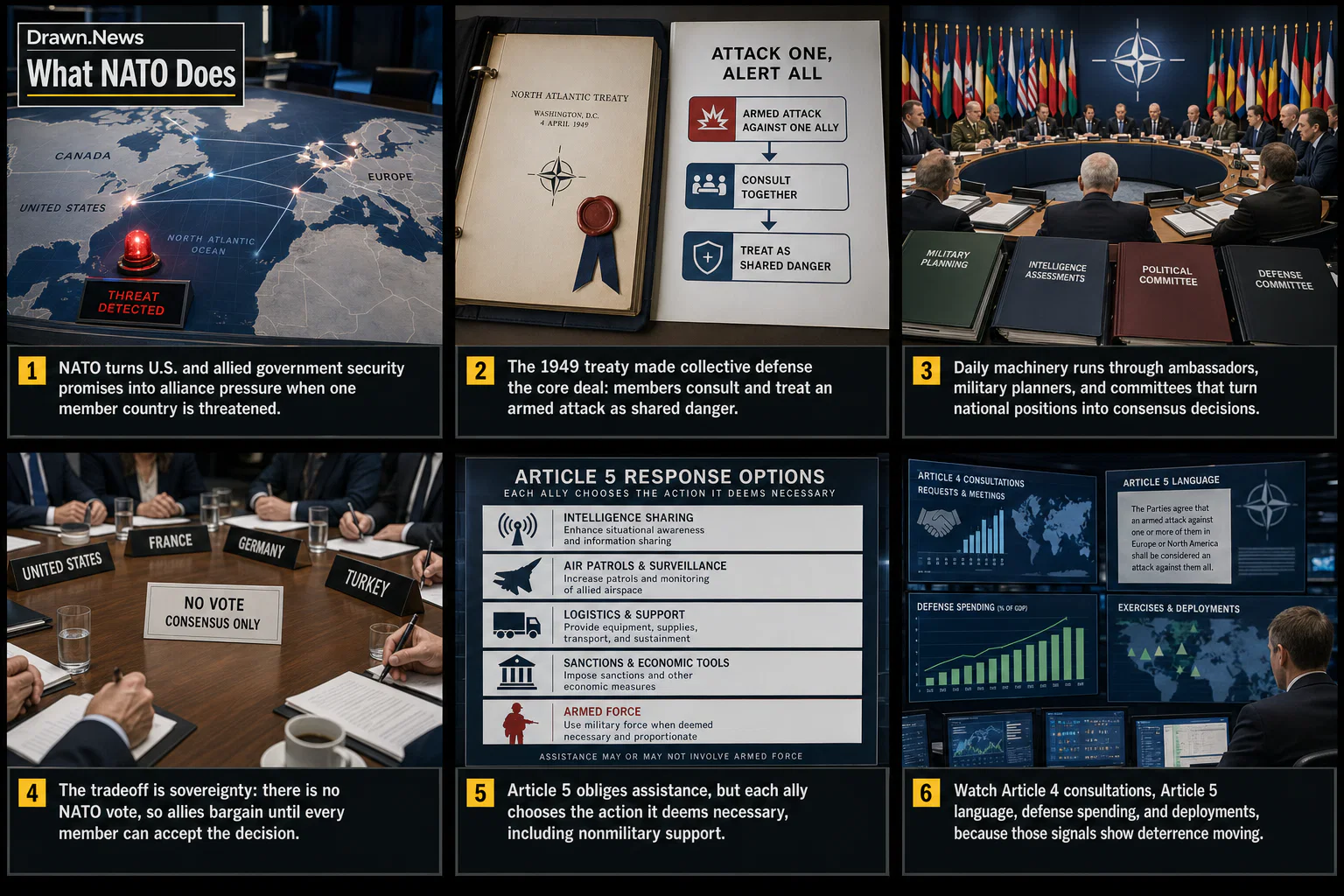
NATO is a political and military alliance that turns member consultation, consensus, deterrence planning, and Article 5 collective defense into a shared security mechanism.
- Frame 1NATO turns U.S. and allied government security promises into alliance pressure when one member country is threatened.
- Frame 2The 1949 treaty made collective defense the core deal: members consult and treat an armed attack as shared danger.
- Frame 3Daily machinery runs through ambassadors, military planners, and committees that turn national positions into consensus decisions.
- Frame 4The tradeoff is sovereignty: there is no NATO vote, so allies bargain until every member can accept the decision.
- Frame 5Article 5 obliges assistance, but each ally chooses the action it deems necessary, including nonmilitary support.
- Frame 6Watch Article 4 consultations, Article 5 language, defense spending, and deployments, because those signals show deterrence moving.
How this was checked
- Reporting
- Cross-checked across 5 sources
- Claims
- We checked the names, dates, numbers, and core facts against the reporting linked above
- Artwork
- This is an editorial illustration based on the reporting, not source photography
- Published
- Jun 1, 6:55 PM EDT
- Our standards
- Editorial standards and corrections