Latest briefs Browse latest →
How Large Language Models Work
Large language models learn statistical patterns from text and generate likely next tokens through training data, model weights, prompts, and verification limits.
Full visual brief
Follow the story
Sources & verification
Sources behind this guide, checked before publication.
Brief text
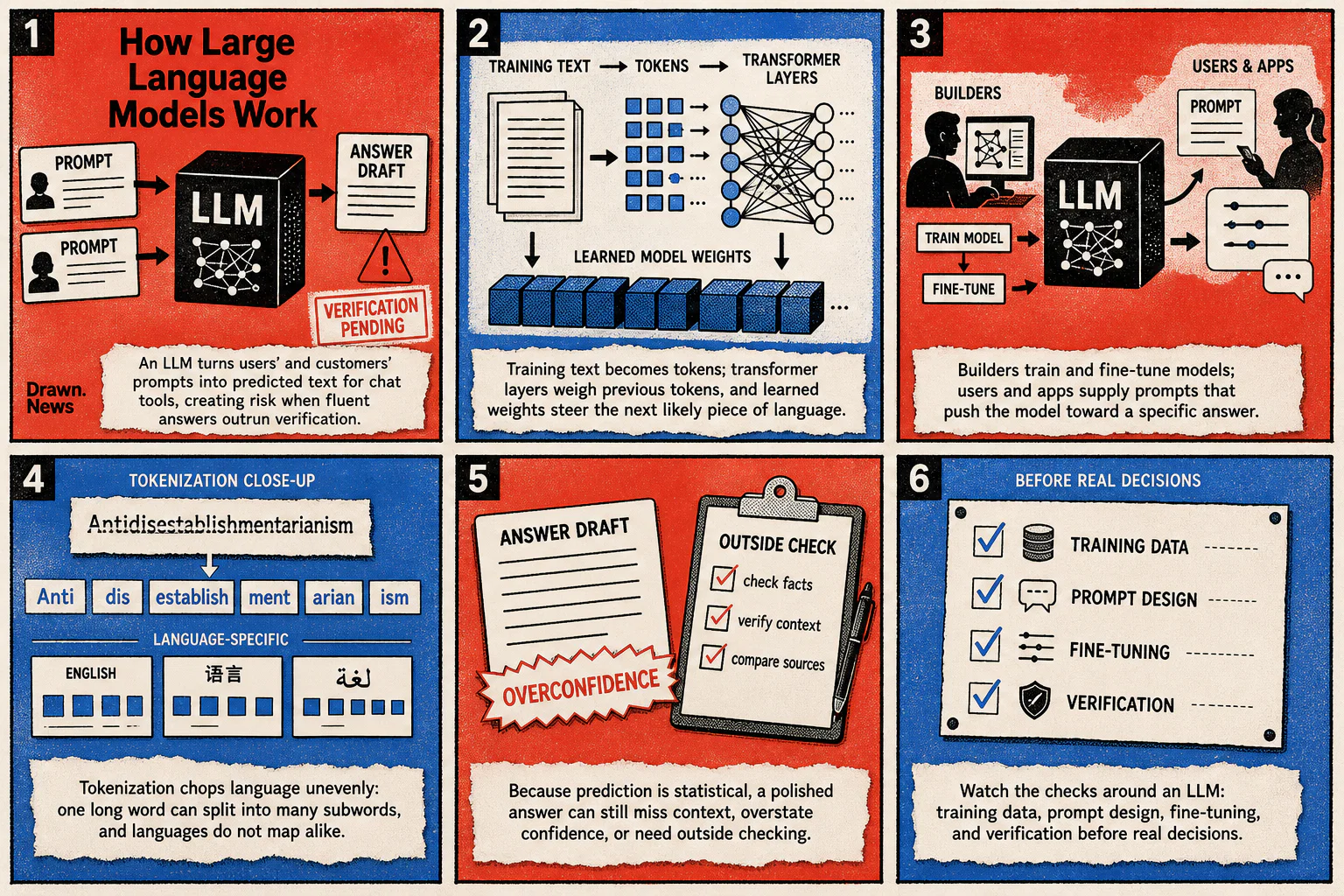
Large language models learn statistical patterns from text and generate likely next tokens through training data, model weights, prompts, and verification limits.
- Frame 1An LLM turns users' and customers' prompts into predicted text for chat tools, creating risk when fluent answers outrun verification.
- Frame 2Training text becomes tokens; transformer layers weigh previous tokens, and learned weights steer the next likely piece of language.
- Frame 3Builders train and fine-tune models; users and apps supply prompts that push the model toward a specific answer.
- Frame 4Tokenization chops language unevenly: one long word can split into many subwords, and languages do not map alike.
- Frame 5Because prediction is statistical, a polished answer can still miss context, overstate confidence, or need outside checking.
- Frame 6Watch the checks around an LLM: training data, prompt design, fine-tuning, and verification before real decisions.
How this was checked
- Reporting
- Cross-checked across 2 sources
- Claims
- We checked the names, dates, numbers, and core facts against the reporting linked above
- Artwork
- This is an editorial illustration based on the reporting, not source photography
- Published
- Jun 2, 8:10 AM EDT
- Our standards
- Editorial standards and corrections