Latest briefs Browse latest →
Wildfire Smoke’s Ozone Toll
NASA-supported study warns wildfire smoke raises ground-level ozone across the contiguous U.S., creating public health risk far from fires
Full visual brief
Follow the story
Sources & verification
Reporting behind this brief, checked before publication.
Brief text
Over the last decade, wildfires have worsened ground-level ozone pollution across much of the contiguous United States, creating unhealthy air far from active flames.
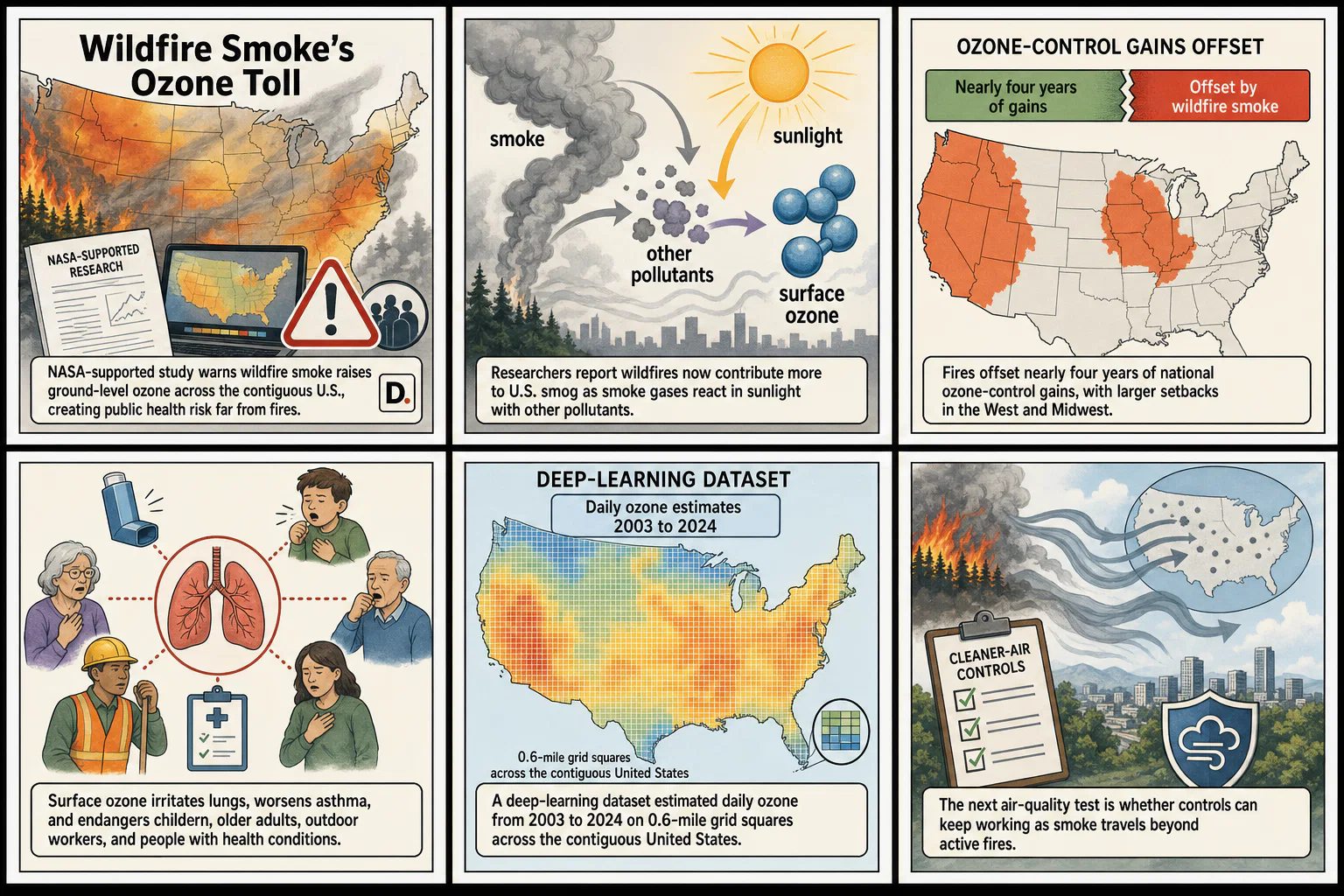
- Frame 1NASA-supported study warns wildfire smoke raises ground-level ozone across the contiguous U.S., creating public health risk far from fires.
- Frame 2Researchers report wildfires now contribute more to U.S. smog as smoke gases react in sunlight with other pollutants.
- Frame 3Fires offset nearly four years of national ozone-control gains, with larger setbacks in the West and Midwest.
- Frame 4Surface ozone irritates lungs, worsens asthma, and endangers children, older adults, outdoor workers, and people with health conditions.
- Frame 5A deep-learning dataset estimated daily ozone from 2003 to 2024 on 0.6-mile grid squares across the contiguous United States.
- Frame 6The next air-quality test is whether controls can keep working as smoke travels beyond active fires.
How this was checked
- Reporting
- Checked against the primary source
- Claims
- We checked the names, dates, numbers, and core facts against the reporting linked above
- Artwork
- This is an editorial illustration based on the reporting, not source photography
- Published
- Jun 6, 1:43 AM EDT
- Our standards
- Editorial standards and corrections