Latest briefs Browse latest →
AI Polling Stress Test
Polling's public promise faces a risk as AI answers and fake respondents test how surveys find real people
Full visual brief
Follow the story
Sources & verification
Reporting behind this brief, checked before publication.
Brief text
Courtney Kennedy, vice president of methods and innovation, answers some common questions about the current polling landscape in the U.S.
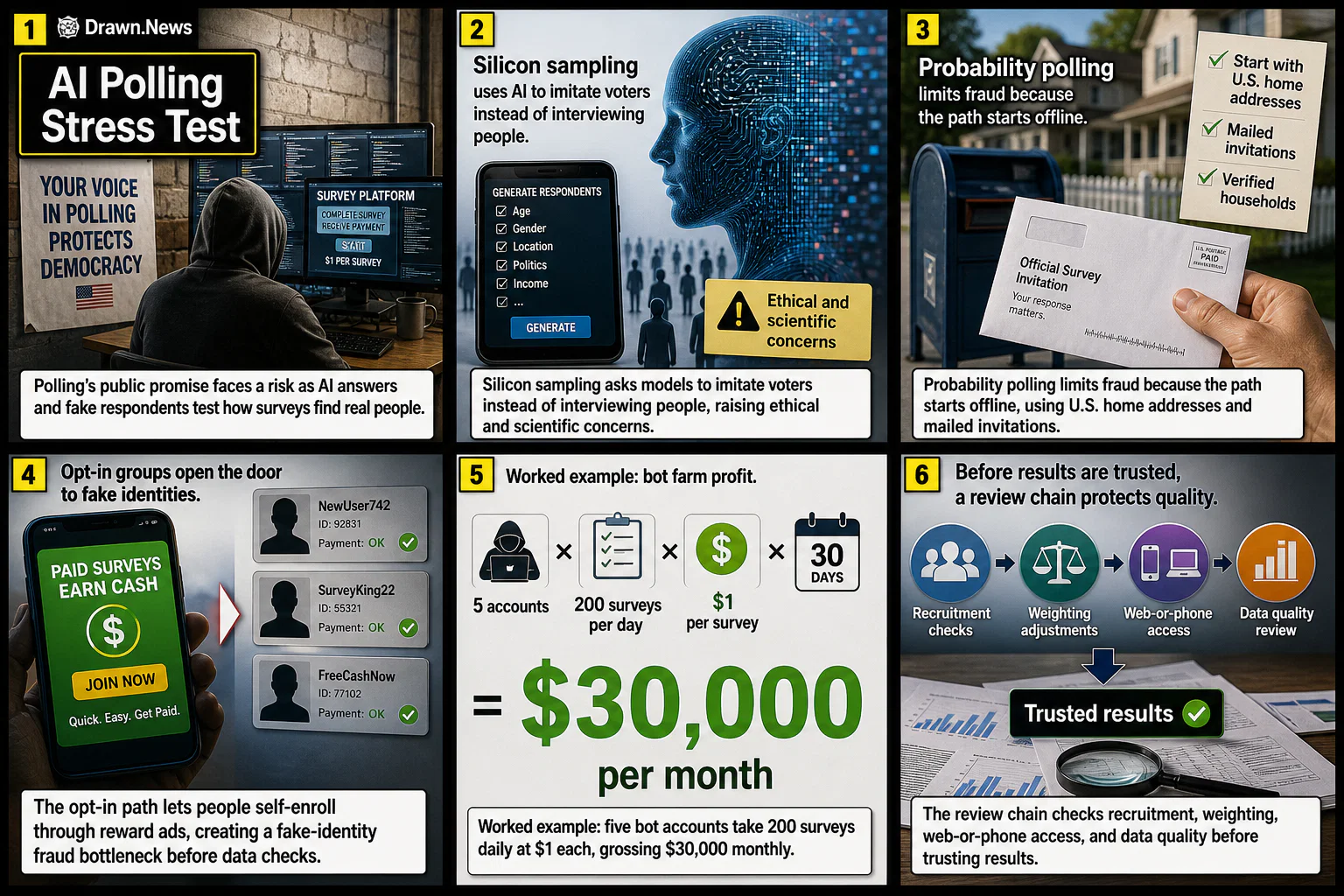
- Frame 1Polling's public promise faces a risk as AI answers and fake respondents test how surveys find real people.
- Frame 2Silicon sampling asks models to imitate voters instead of interviewing people, raising ethical and scientific concerns.
- Frame 3Probability polling limits fraud because the path starts offline, using U.S. home addresses and mailed invitations.
- Frame 4The opt-in path lets people self-enroll through reward ads, creating a fake-identity fraud bottleneck before data checks.
- Frame 5Worked example: five bot accounts take 200 surveys daily at $1 each, grossing $30,000 monthly.
- Frame 6The review chain checks recruitment, weighting, web-or-phone access, and data quality before trusting results.
How this was checked
- Reporting
- Checked against the primary source
- Claims
- We checked the names, dates, numbers, and core facts against the reporting linked above
- Artwork
- This is an editorial illustration based on the reporting, not source photography
- Published
- Jun 6, 10:14 AM EDT
- Our standards
- Editorial standards and corrections