Latest briefs Browse latest →
The Electoral College, Explained
The Electoral College turns state vote outcomes into electoral votes through state allocations, electors, certification, Congress's count, and close-state math.
Full visual brief
Follow the story
Sources & verification
Sources behind this guide, checked before publication.
Brief text
The Electoral College turns state vote outcomes into electoral votes through state allocations, electors, certification, Congress's count, and close-state math.
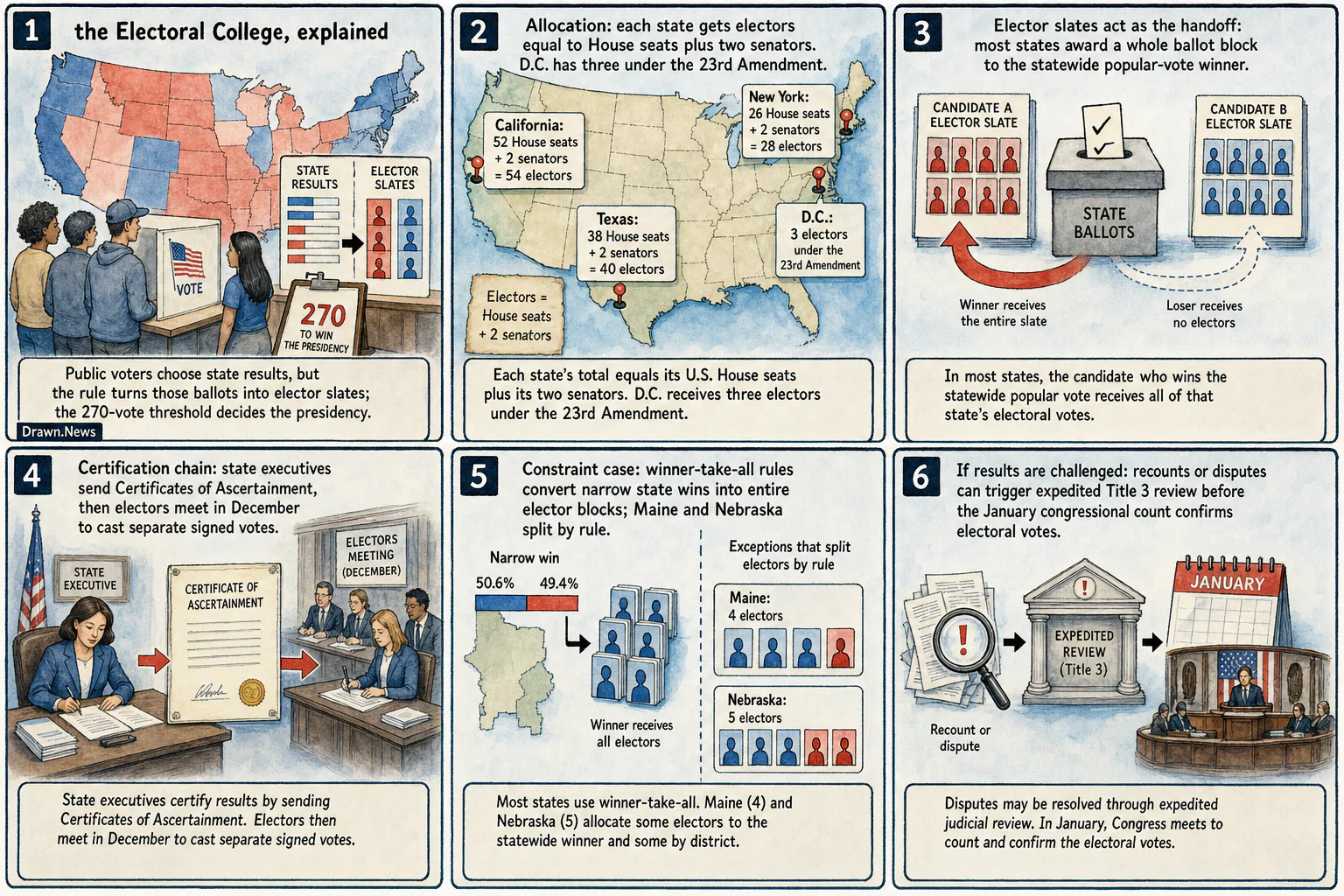
- Frame 1Public voters choose state results, but the rule turns those ballots into elector slates; the 270-vote threshold decides the presidency.
- Frame 2Allocation map: each state gets electors equal to House seats plus two senators; D.C. has three under the 23rd Amendment.
- Frame 3Elector slates act as the handoff: most states award a whole ballot block to the statewide popular-vote winner.
- Frame 4Certification document chain: state executives send Certificates of Ascertainment, then electors meet in December to cast separate signed votes.
- Frame 5Constraint case: winner-take-all rules convert narrow state wins into entire elector blocks; Maine and Nebraska split by rule.
- Frame 6Failure path: recounts or disputes can trigger expedited Title 3 review before the January congressional count confirms electoral votes.
How this was checked
- Reporting
- Cross-checked across 2 sources
- Claims
- We checked the names, dates, numbers, and core facts against the reporting linked above
- Artwork
- This is an editorial illustration based on the reporting, not source photography
- Published
- Jun 4, 12:12 PM EDT
- Our standards
- Editorial standards and corrections