Latest briefs Browse latest →
How Tariffs Work
A tariff is a tax on imported goods that moves through customs paperwork, importer costs, retail prices, and trade leverage.
Full visual brief
Follow the story
Sources & verification
Sources behind this guide, checked before publication.
Brief text
A tariff is a tax on imported goods that moves through customs paperwork, importer costs, retail prices, and trade leverage.
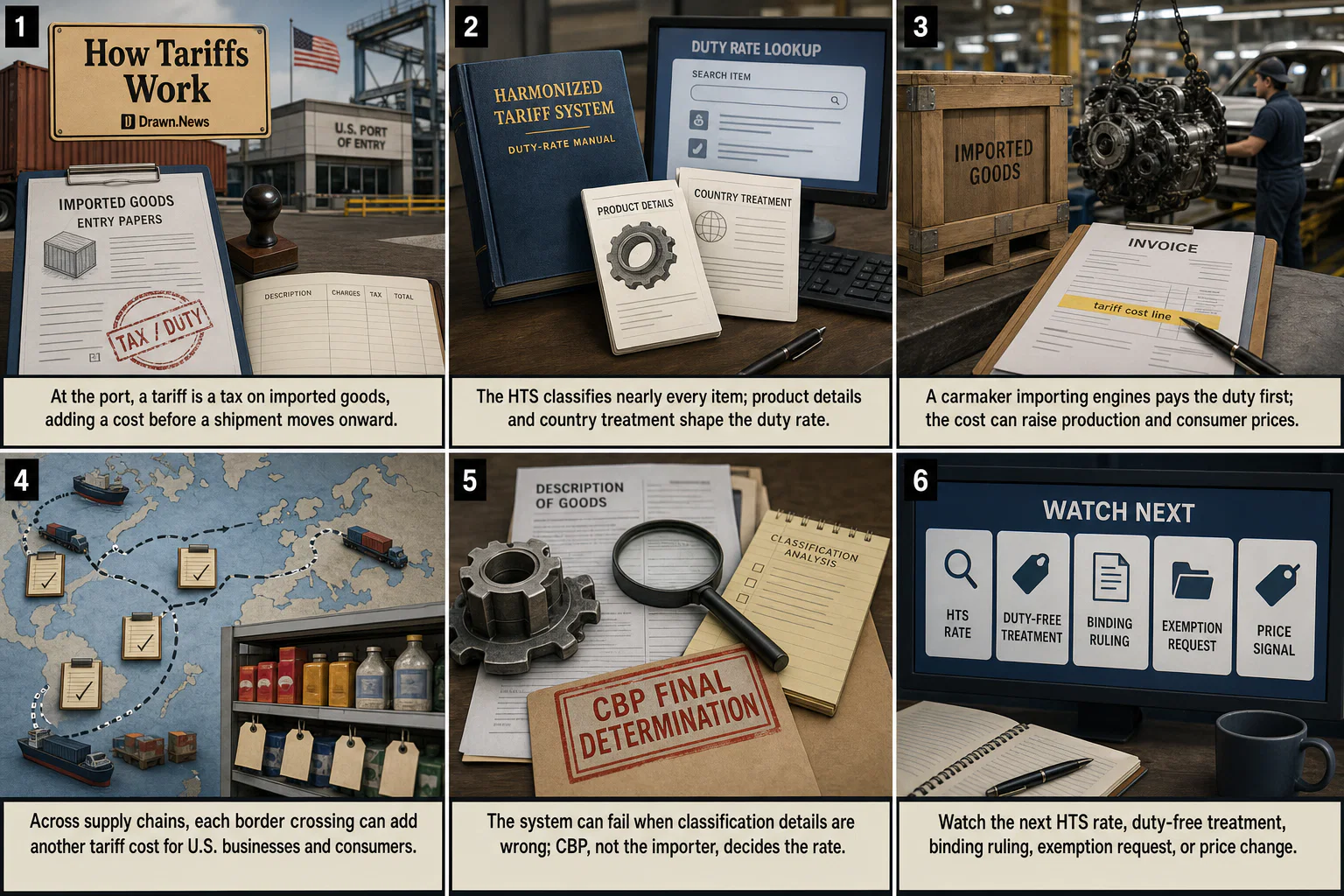
- Frame 1At the port, a tariff is a tax on imported goods, adding a cost before a shipment moves onward.
- Frame 2The HTS classifies nearly every item; product details and country treatment shape the duty rate.
- Frame 3A carmaker importing engines pays the duty first; the cost can raise production and consumer prices.
- Frame 4Across supply chains, each border crossing can add another tariff cost for U.S. businesses and consumers.
- Frame 5The system can fail when classification details are wrong; CBP, not the importer, decides the rate.
- Frame 6Watch the next HTS rate, duty-free treatment, binding ruling, exemption request, or price change.
How this was checked
- Reporting
- Cross-checked across 2 sources
- Claims
- We checked the names, dates, numbers, and core facts against the reporting linked above
- Artwork
- This is an editorial illustration based on the reporting, not source photography
- Published
- Jun 1, 12:57 PM EDT
- Our standards
- Editorial standards and corrections