Latest briefs Browse latest →
Power Grid Failure Mechanics
Power grids fail when generation, transmission, demand, protection systems and operator decisions fall out of balance faster than the system can recover.
Full visual brief
Follow the story
Sources & verification
Sources behind this guide, checked before publication.
Brief text
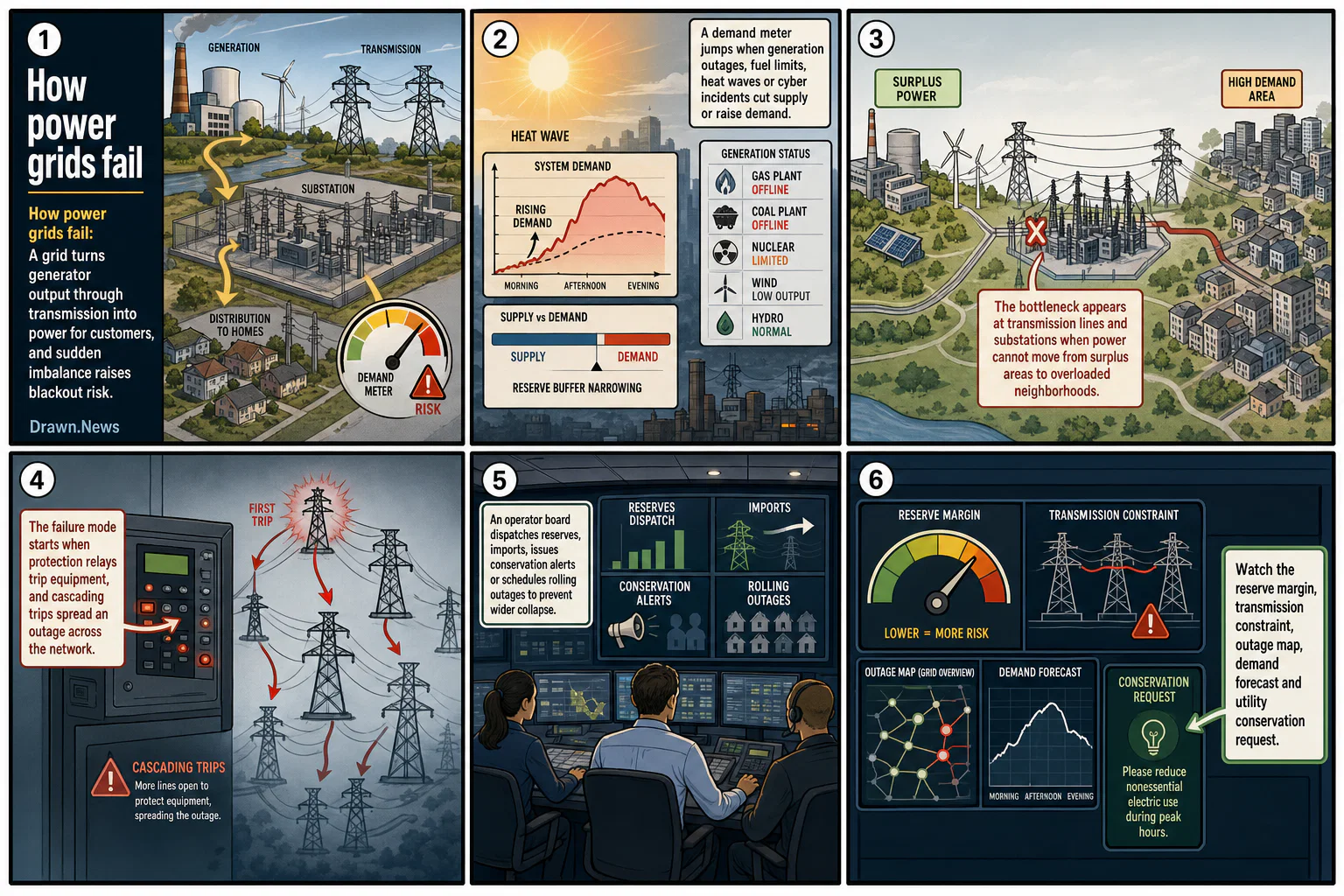
Power grids fail when generation, transmission, demand, protection systems and operator decisions fall out of balance faster than the system can recover.
- Frame 1How power grids fail: A grid turns generator output through transmission into power for customers, and sudden imbalance raises blackout risk.
- Frame 2A demand meter jumps when generation outages, fuel limits, heat waves or cyber incidents cut supply or raise demand.
- Frame 3The bottleneck appears at transmission lines and substations when power cannot move from surplus areas to overloaded neighborhoods.
- Frame 4The failure mode starts when protection relays trip equipment, and cascading trips spread an outage across the network.
- Frame 5An operator board dispatches reserves, imports power, issues conservation alerts or schedules rolling outages to prevent wider collapse.
- Frame 6Watch the reserve margin, transmission constraint, outage map, demand forecast and utility conservation request.
How this was checked
- Reporting
- Cross-checked across 2 sources
- Claims
- We checked the names, dates, numbers, and core facts against the reporting linked above
- Artwork
- This is an editorial illustration based on the reporting, not source photography
- Published
- Jun 24, 8:29 AM EDT
- Our standards
- Editorial standards and corrections