Latest briefs Browse latest →
AI safety tests turn model behavior
AI safety tests turn model behavior, red-team probes, benchmark results, deployment limits and monitoring into evidence about where a system can fail.
Full visual brief
Follow the story
Sources & verification
Sources behind this guide, checked before publication.
Brief text
AI safety tests turn model behavior, red-team probes, benchmark results, deployment limits and monitoring into evidence about where a system can fail.
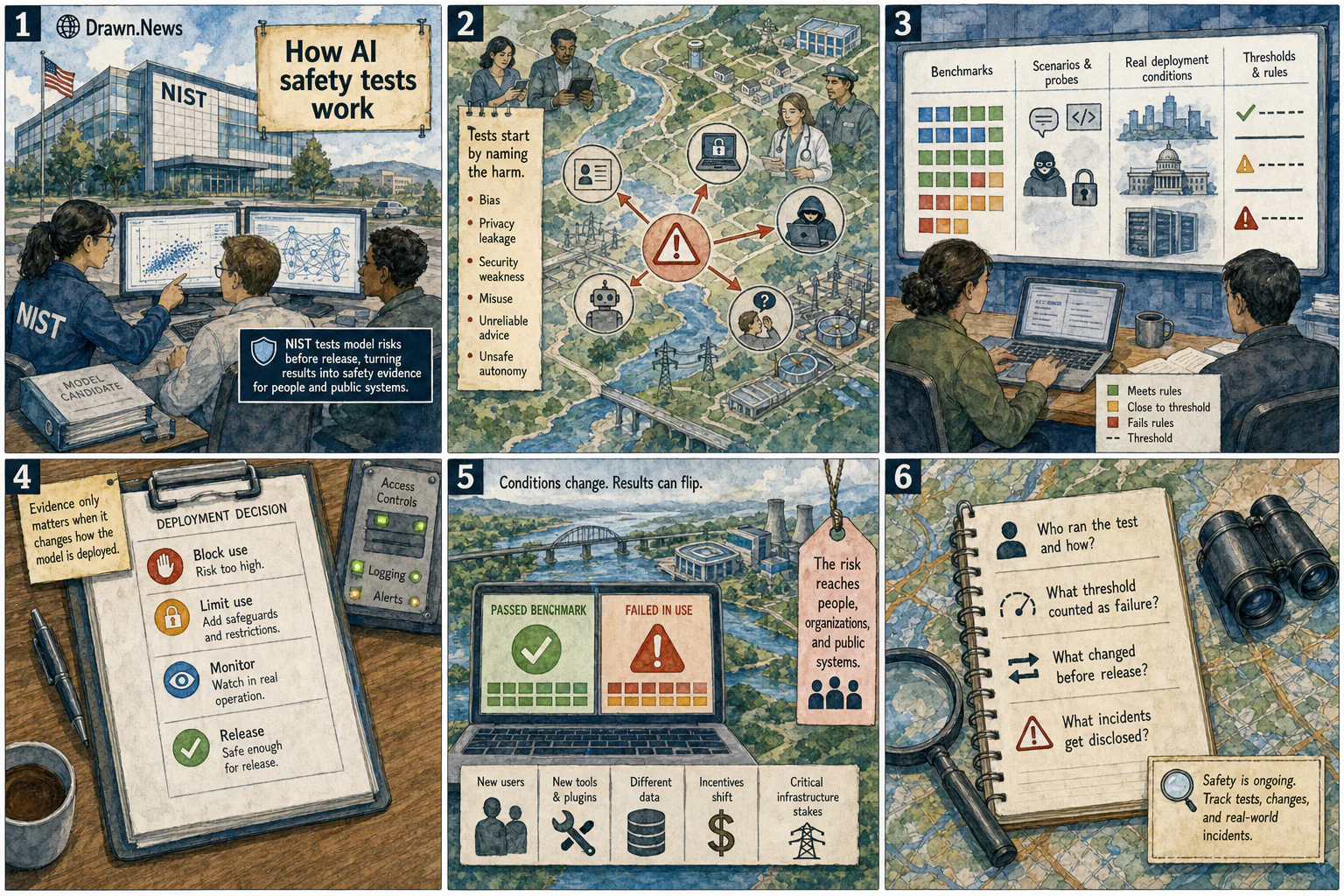
- Frame 1NIST tests model risks before release, turning benchmark results into safety evidence for people and public systems.
- Frame 2The test starts by naming the harm: bias, privacy leakage, security weakness, misuse, unreliable advice, or unsafe autonomy.
- Frame 3Evaluators use benchmarks, scenarios, and probes to compare behavior against rules, thresholds, and real deployment conditions.
- Frame 4The evidence becomes useful only when it changes deployment: blocked use, added limits, monitoring, or release controls.
- Frame 5A model can pass a benchmark and still fail when users, tools, data, incentives, or critical-infrastructure stakes shift.
- Frame 6Watch who ran the test, what threshold counted as failure, what changed before release, and what incidents get disclosed.
How this was checked
- Reporting
- Cross-checked across 2 sources
- Claims
- We checked the names, dates, numbers, and core facts against the reporting linked above
- Artwork
- This is an editorial illustration based on the reporting, not source photography
- Published
- Jun 23, 4:27 PM EDT
- Our standards
- Editorial standards and corrections