Latest briefs Browse latest →
NATO Burden Sharing, Explained
NATO burden sharing turns alliance strategy into defense-spending targets, force plans, basing decisions and commitment disputes among members.
Full visual brief
Follow the story
Sources & verification
Sources behind this guide, checked before publication.
Brief text
NATO burden sharing turns alliance strategy into defense-spending targets, force plans, basing decisions and commitment disputes among members.
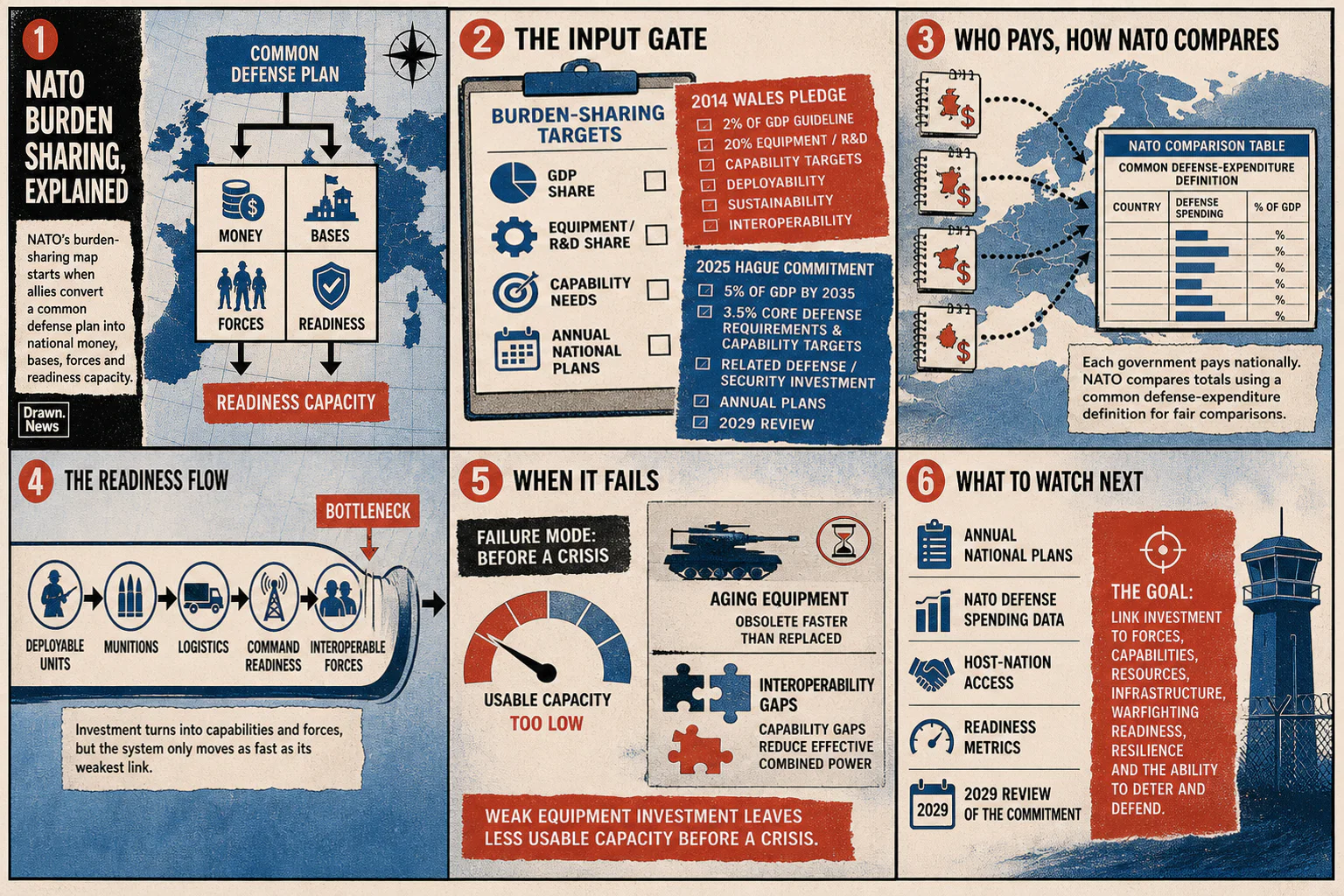
- Frame 1NATO's burden-sharing map starts when allies convert a common defense plan into national money, bases, forces and readiness capacity.
- Frame 2The input gate sets targets for GDP share, equipment share, capability needs and annual national plans.
- Frame 3A budget ledger shows each government paying nationally while NATO compares totals with a common defense-spending definition.
- Frame 4A readiness flow exposes the bottleneck: deployable units, munitions, logistics, command readiness and interoperable forces.
- Frame 5The failure mode is visible when aging equipment and interoperability gaps leave less usable capacity before a crisis.
- Frame 6Watch annual plans, NATO spending data, host-nation access, readiness metrics and the 2029 review of the commitment.
How this was checked
- Reporting
- Checked against 5 official sources
- Claims
- We checked the names, dates, numbers, and core facts against the reporting linked above
- Artwork
- This is an editorial illustration based on the reporting, not source photography
- Published
- Jun 19, 8:35 AM EDT
- Our standards
- Editorial standards and corrections