Latest briefs Browse latest →
Deposit Insurance, Explained
FDIC deposit insurance protects covered deposits at insured banks up to legal limits, funded through the Deposit Insurance Fund, and paid through bank resolution or direct depositor payoff when a bank fails.
Full visual brief
Follow the story
Sources & verification
Sources behind this guide, checked before publication.
Brief text
FDIC deposit insurance protects covered deposits at insured banks up to legal limits, funded through the Deposit Insurance Fund, and paid through bank resolution or direct depositor payoff when a bank fails.
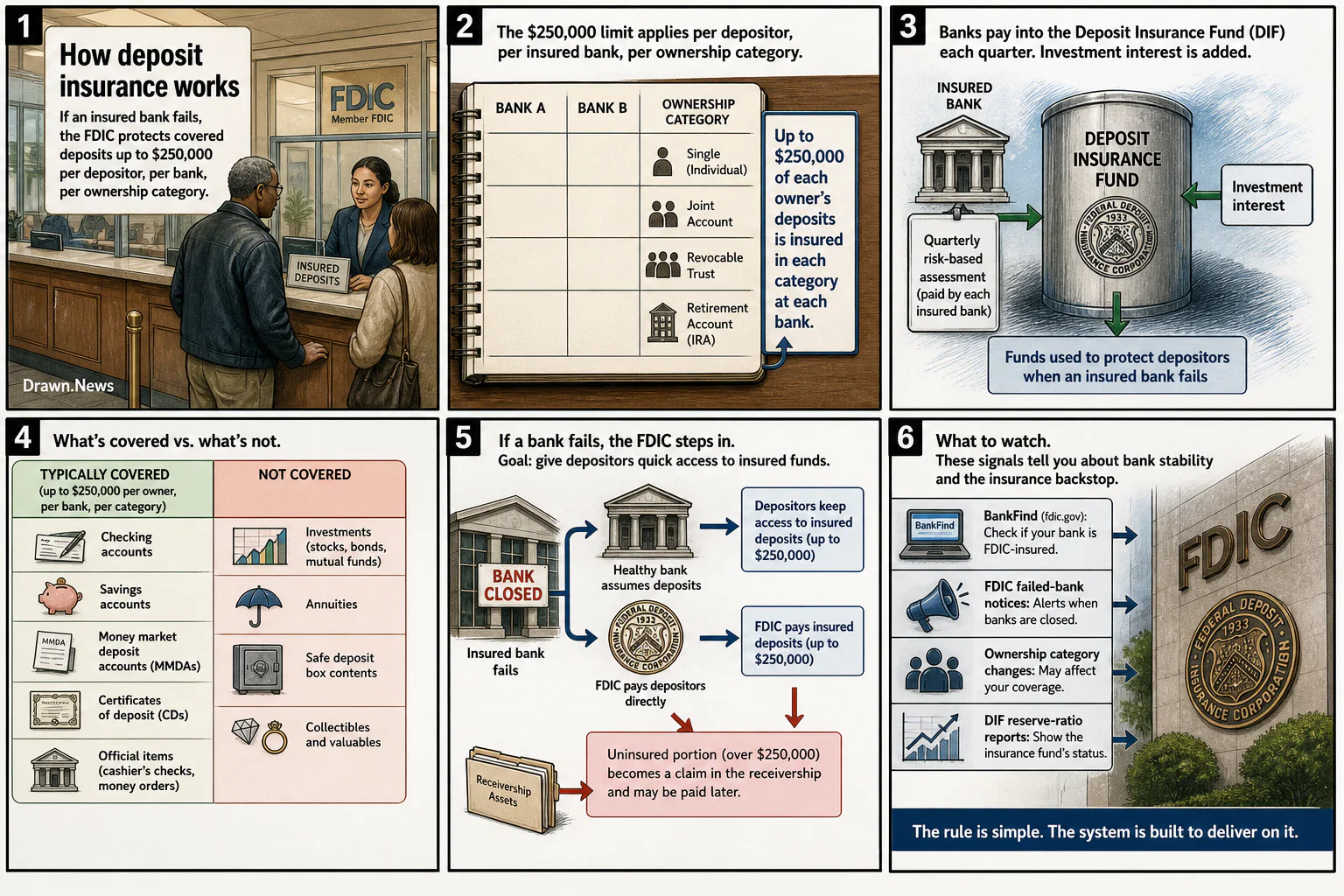
- Frame 1FDIC acts for bank customers: deposit insurance protects covered money when an insured bank fails.
- Frame 2Ledger threshold: the $250,000 rule limits each depositor at each insured bank and ownership category; no extra totals.
- Frame 3Funding formula: each insured bank pays quarterly risk-based assessments into the Deposit Insurance Fund, with investment interest added.
- Frame 4Coverage grid: checking, savings, MMDAs, CDs, and bank official items count as deposits; investments and safe deposit contents do not.
- Frame 5Failure mode case: FDIC routes a closed bank through healthy-bank assumption or direct payoff; uninsured excess becomes a receivership claim.
- Frame 6Watch signal: BankFind status, ownership-category changes, failed-bank notices, and Deposit Insurance Fund reserve ratio reports flag stress.
How this was checked
- Reporting
- Cross-checked across 4 sources
- Claims
- We checked the names, dates, numbers, and core facts against the reporting linked above
- Artwork
- This is an editorial illustration based on the reporting, not source photography
- Published
- Jun 18, 12:23 PM EDT
- Our standards
- Editorial standards and corrections