Latest briefs Browse latest →
Foreign Policy Splits Map
Pew says 10,357 U.S. adults sort into nine groups, mapping public foreign-policy splits beyond party labels
Full visual brief
Follow the story
Sources & verification
Reporting behind this brief, checked before publication.
Brief text
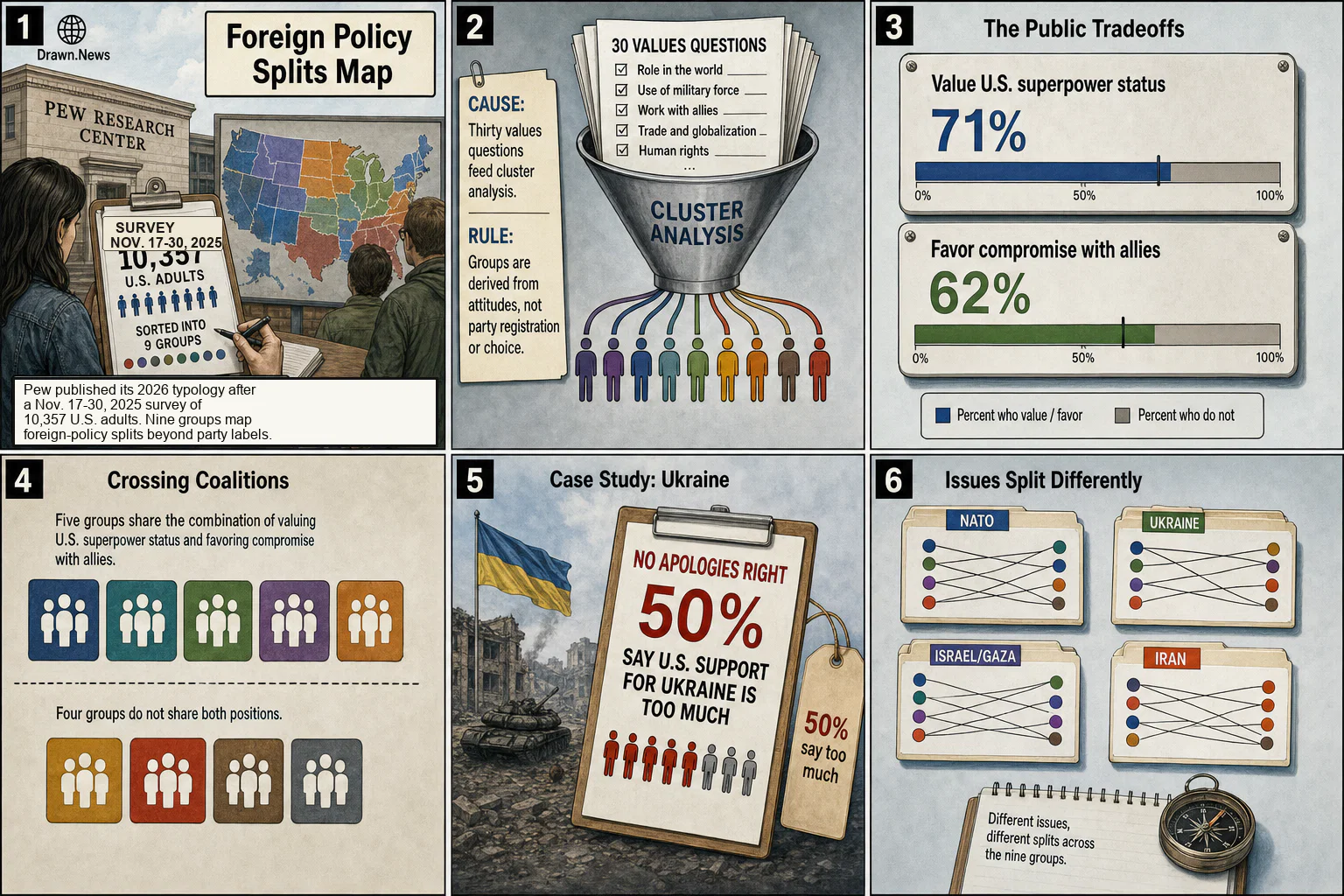
Pew's 2026 typology sorts 10,357 U.S. adults into nine clusters using 30 values questions, then maps where foreign-policy views split on allies, NATO, Ukraine, Israel/Gaza, and Iran.
- Frame 1Pew says 10,357 U.S. adults sort into nine groups, mapping public foreign-policy splits beyond party labels.
- Frame 2Thirty values questions feed cluster analysis, so groups reflect attitudes rather than registration or party choice.
- Frame 3A chart shows the tradeoff: 71% value U.S. superpower status, while 62% favor compromise with allies.
- Frame 4The map crosses coalitions: five left and right groups share the superpower-plus-allies position, while four diverge.
- Frame 5The Ukraine case shows the break: 50% of No Apologies Right say U.S. support is too much.
- Frame 6The issue map shifts by topic: NATO, Ukraine, Israel/Gaza, and Iran split the typology differently.
How this was checked
- Reporting
- Checked against the primary source
- Claims
- We checked the names, dates, numbers, and core facts against the reporting linked above
- Artwork
- This is an editorial illustration based on the reporting, not source photography
- Published
- Jun 12, 10:21 PM EDT
- Our standards
- Editorial standards and corrections