Latest briefs Browse latest →
FDA approvals turn lab evidence
FDA approvals turn lab evidence, clinical studies, safety review, labeling and postmarket monitoring into decisions about drugs, vaccines or devices.
Full visual brief
Follow the story
Sources & verification
Sources behind this guide, checked before publication.
Brief text
FDA approvals turn lab evidence, clinical studies, safety review, labeling and postmarket monitoring into decisions about drugs, vaccines or devices.
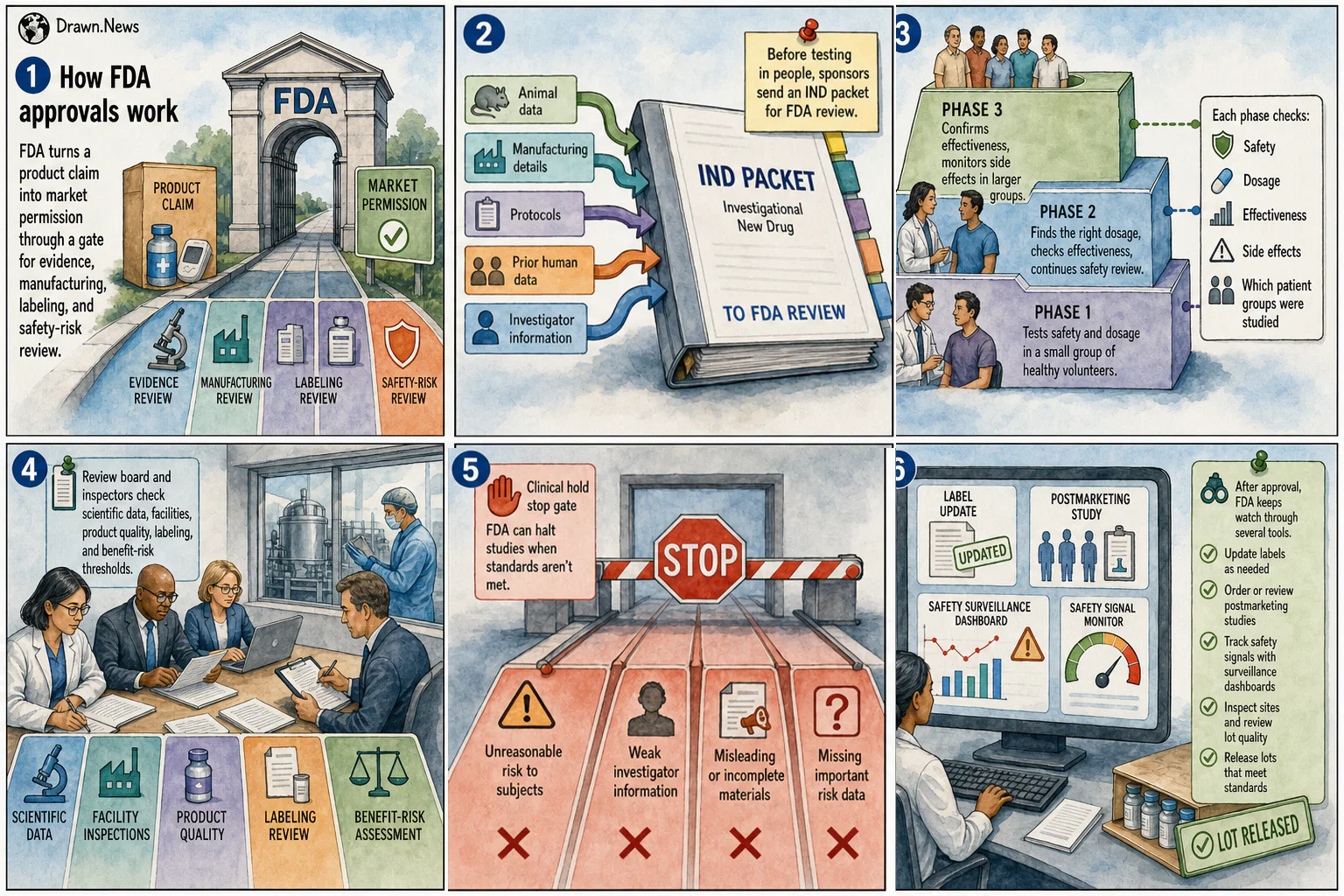
- Frame 1FDA approvals turn a product claim into market permission through an agency gate for evidence, manufacturing, labeling, and safety risk review.
- Frame 2IND packet inputs give FDA animal data, manufacturing details, protocols, prior human data, and investigator information before testing.
- Frame 3Clinical phase sequence checks safety, dosage, effectiveness, side effects, and which patient groups the evidence covers.
- Frame 4The review board and inspectors check scientific data, facilities, product quality, labeling, and benefit-risk thresholds.
- Frame 5Failure mode: a clinical-hold stop gate blocks studies for unreasonable risk, weak investigators, misleading materials, or missing risk data.
- Frame 6Postapproval monitoring chain watches label changes, postmarketing studies, safety-surveillance dashboards, and lot release.
How this was checked
- Reporting
- Cross-checked across 2 sources
- Claims
- We checked the names, dates, numbers, and core facts against the reporting linked above
- Artwork
- This is an editorial illustration based on the reporting, not source photography
- Published
- Jun 24, 8:40 PM EDT
- Our standards
- Editorial standards and corrections