Latest briefs Browse latest →
Defense Production, explained
Defense production connects federal priorities, contracts, industrial-base capacity, surge powers, bottlenecks, and the materials needed for military readiness.
Full visual brief
Follow the story
Sources & verification
Sources behind this guide, checked before publication.
Brief text
Defense production connects federal priorities, contracts, industrial-base capacity, surge powers, bottlenecks, and the materials needed for military readiness.
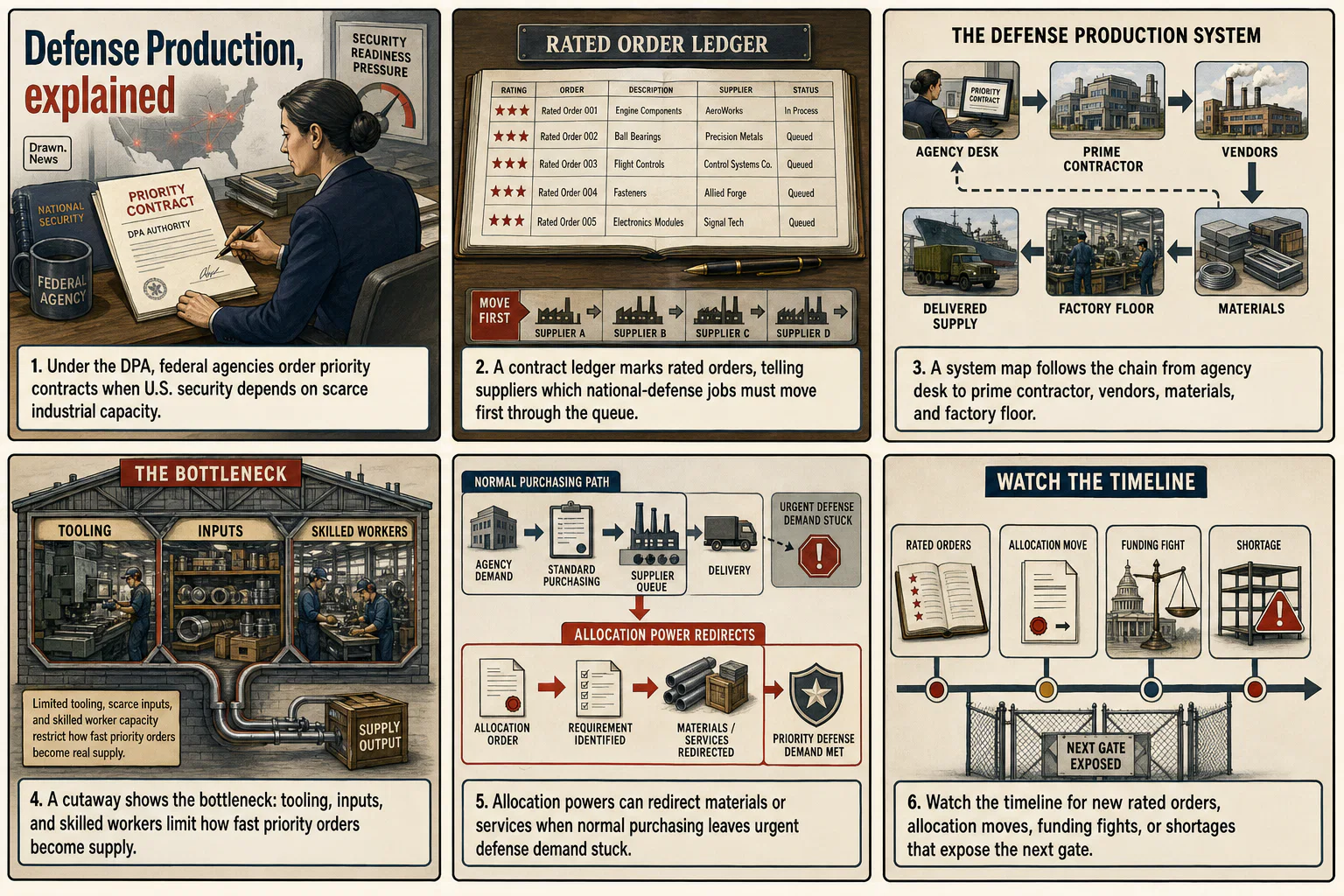
- Frame 1Under the DPA, federal agencies order priority contracts when U.S. security depends on scarce industrial capacity.
- Frame 2A contract ledger marks rated orders, telling suppliers which national-defense jobs must move first through the queue.
- Frame 3A system map follows the chain from agency desk to prime contractor, vendors, materials, and factory floor.
- Frame 4A cutaway shows the bottleneck: tooling, inputs, and skilled workers limit how fast priority orders become supply.
- Frame 5Allocation powers can redirect materials or services when normal purchasing leaves urgent defense demand stuck.
- Frame 6Watch the timeline for new rated orders, allocation moves, funding fights, or shortages that expose the next gate.
How this was checked
- Reporting
- Cross-checked across 2 sources
- Claims
- We checked the names, dates, numbers, and core facts against the reporting linked above
- Artwork
- This is an editorial illustration based on the reporting, not source photography
- Published
- Jun 3, 8:07 PM EDT
- Our standards
- Editorial standards and corrections