Latest briefs Browse latest →
How Export Controls Work
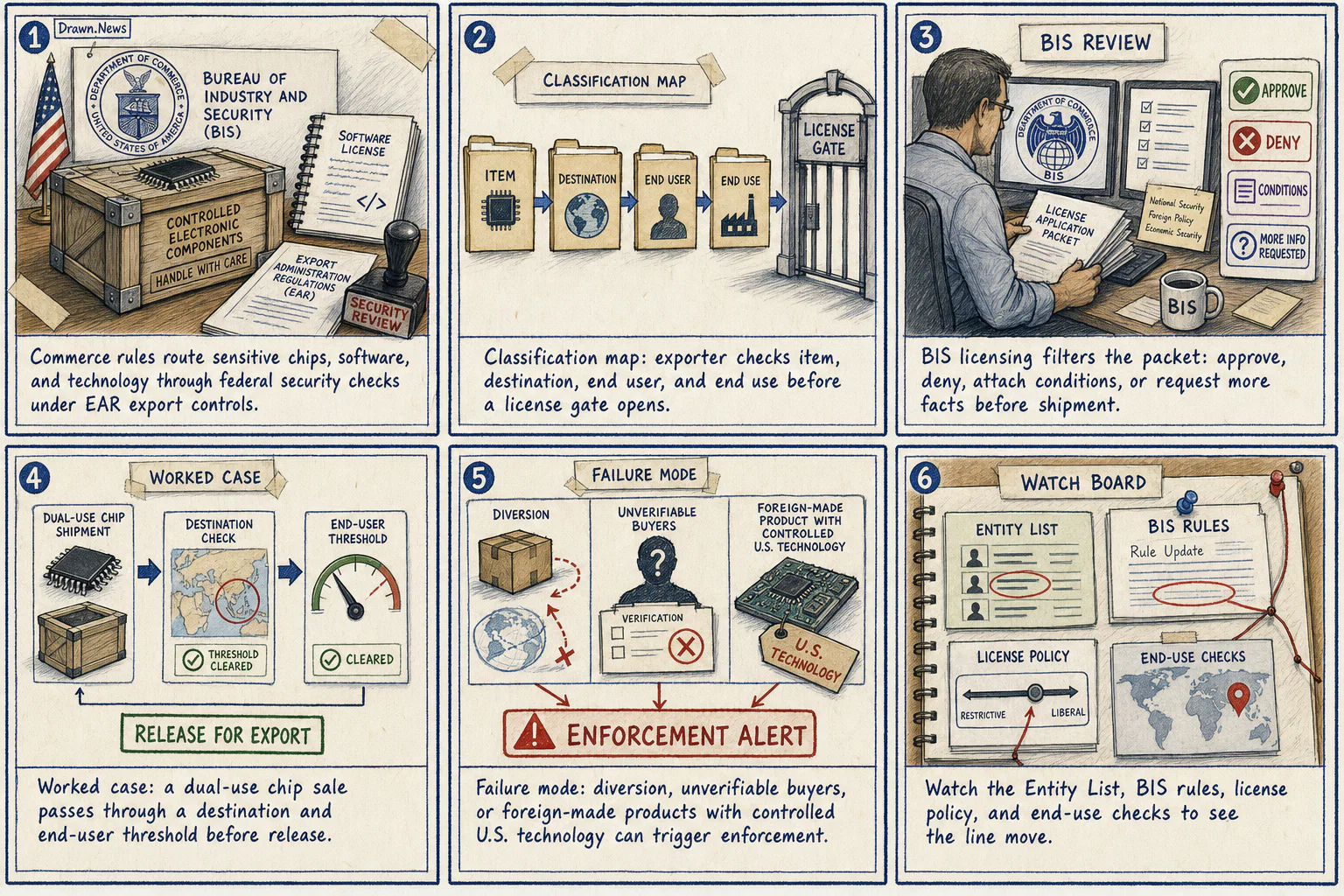
U.S. export controls route sensitive chips, software, and technology through EAR classification, licensing, end-use checks, and enforcement so national-security and foreign-policy risks can be managed.
Full visual brief
Follow the story
Sources & verification
Sources behind this guide, checked before publication.
Brief text
U.S. export controls route sensitive chips, software, and technology through EAR classification, licensing, end-use checks, and enforcement so national-security and foreign-policy risks can be managed.
- Frame 1Commerce rules route sensitive chips, software, and technology through federal security checks under EAR export controls.
- Frame 2Classification map: exporter checks item, destination, end user, and end use before a license gate opens.
- Frame 3BIS licensing filters the packet: approve, deny, attach conditions, or request more facts before shipment.
- Frame 4Worked case: a dual-use chip sale passes through a destination and end-user threshold before release.
- Frame 5Failure mode: diversion, unverifiable buyers, or foreign-made products with controlled U.S. technology can trigger enforcement.
- Frame 6Watch the Entity List, BIS rules, license policy, and end-use checks to see the line move.
How this was checked
- Reporting
- Cross-checked across 2 sources
- Claims
- We checked the names, dates, numbers, and core facts against the reporting linked above
- Artwork
- This is an editorial illustration based on the reporting, not source photography
- Published
- Jun 3, 4:06 PM EDT
- Our standards
- Editorial standards and corrections