Latest briefs Browse latest →
How Civil Nuclear Deals Work
Civil nuclear cooperation deals let countries share reactor technology only after legal terms, safeguards, export licensing, congressional review, and fuel-cycle limits line up.
Full visual brief
Follow the story
Sources & verification
Sources behind this guide, checked before publication.
Brief text
Civil nuclear cooperation deals let countries share reactor technology only after legal terms, safeguards, export licensing, congressional review, and fuel-cycle limits line up.
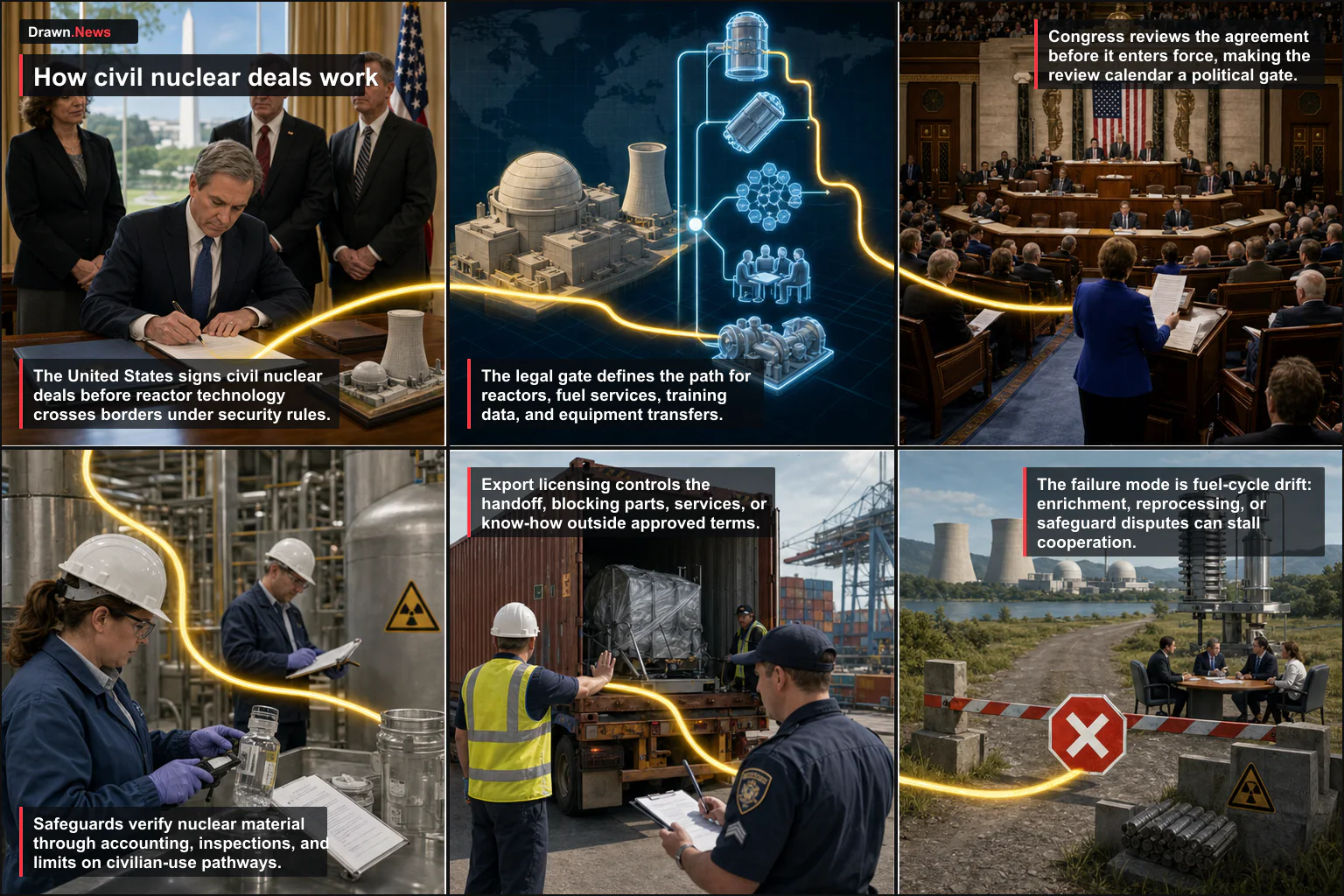
- Frame 1The United States signs civil nuclear deals before reactor technology crosses borders under security rules.
- Frame 2The legal gate defines the path for reactors, fuel services, training data, and equipment transfers.
- Frame 3Congress reviews the agreement before it enters force, making the review calendar a political gate.
- Frame 4Safeguards verify nuclear material through accounting, inspections, and limits on civilian-use pathways.
- Frame 5Export licensing controls the handoff, blocking parts, services, or know-how outside approved terms.
- Frame 6The failure mode is fuel-cycle drift: enrichment, reprocessing, or safeguard disputes can stall cooperation.
How this was checked
- Reporting
- Cross-checked across 3 sources
- Claims
- We checked the names, dates, numbers, and core facts against the reporting linked above
- Artwork
- This is an editorial illustration based on the reporting, not source photography
- Published
- Jul 23, 12:11 PM EDT
- Our standards
- Editorial standards and corrections