Latest briefs Browse latest →
How War Powers Votes Work
War-powers votes test the boundary between presidential command, congressional authorization, reporting clocks, funding leverage, court limits, and public accountability before or after U.S. forces are used.
Full visual brief
Follow the story
Sources & verification
Sources behind this guide, checked before publication.
Brief text
War-powers votes test the boundary between presidential command, congressional authorization, reporting clocks, funding leverage, court limits, and public accountability before or after U.S. forces are used.
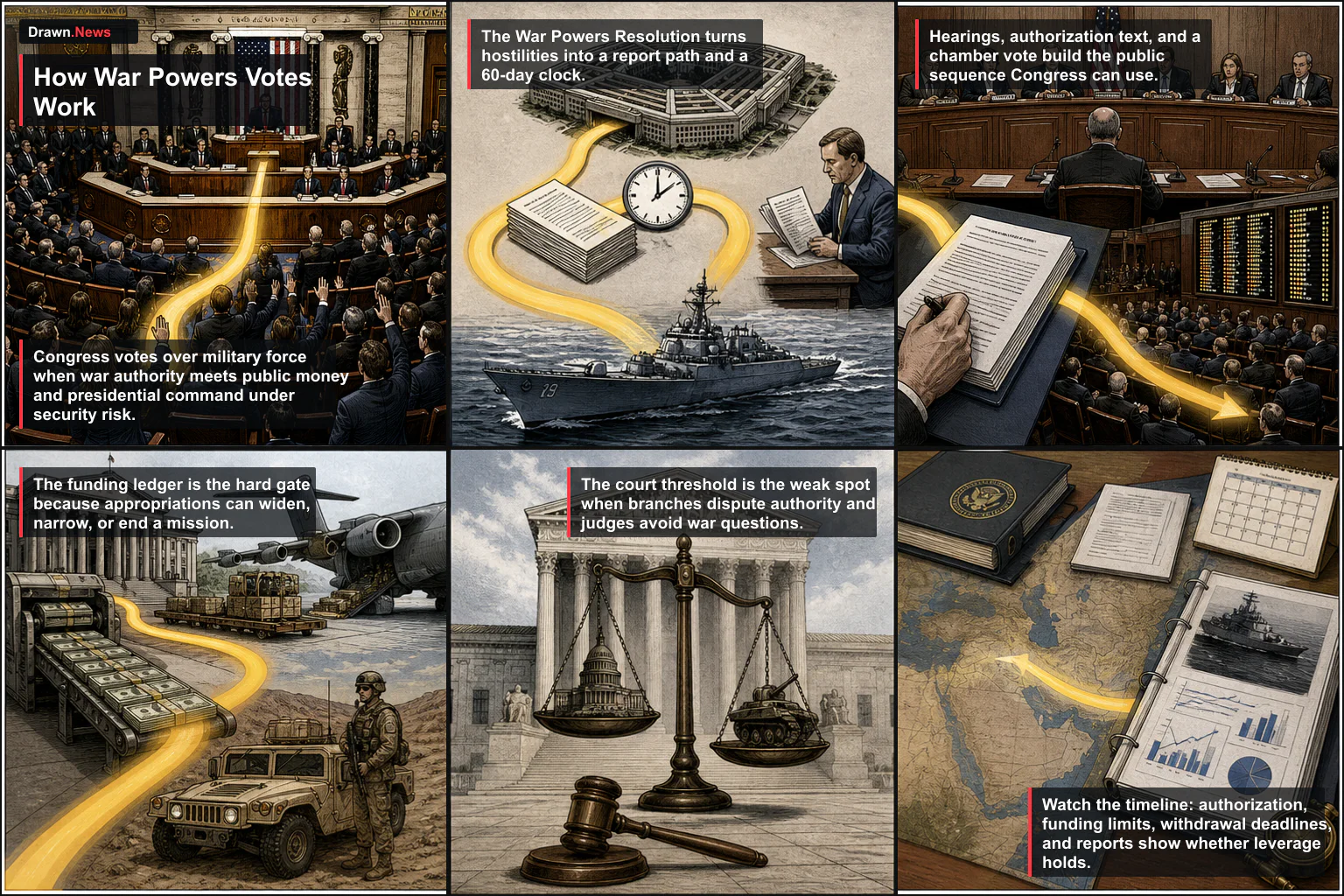
- Frame 1Congress votes over military force when war authority meets public money and presidential command under security risk.
- Frame 2The War Powers Resolution turns hostilities into a report path and a 60-day clock.
- Frame 3Hearings, authorization text, and a chamber vote build the public sequence Congress can use.
- Frame 4The funding ledger is the hard gate because appropriations can widen, narrow, or end a mission.
- Frame 5The court threshold is the weak spot when branches dispute authority and judges avoid war questions.
- Frame 6Watch the timeline: authorization, funding limits, withdrawal deadlines, and reports show whether leverage holds.
How this was checked
- Reporting
- Cross-checked across 4 sources
- Claims
- We checked the names, dates, numbers, and core facts against the reporting linked above
- Artwork
- This is an editorial illustration based on the reporting, not source photography
- Published
- Jul 24, 12:18 PM EDT
- Our standards
- Editorial standards and corrections