Latest briefs Browse latest →
Aerial Fire Drops, Explained
Aerial firefighting drops connect air attack, airbases, pilots, ground crews, water or retardant loads, wind, terrain, avoidance zones, and follow-up line work so aircraft slow fire spread instead of replacing firefighters.
Full visual brief
Follow the story
Sources & verification
Sources behind this guide, checked before publication.
Brief text
Aerial firefighting drops connect air attack, airbases, pilots, ground crews, water or retardant loads, wind, terrain, avoidance zones, and follow-up line work so aircraft slow fire spread instead of replacing firefighters.
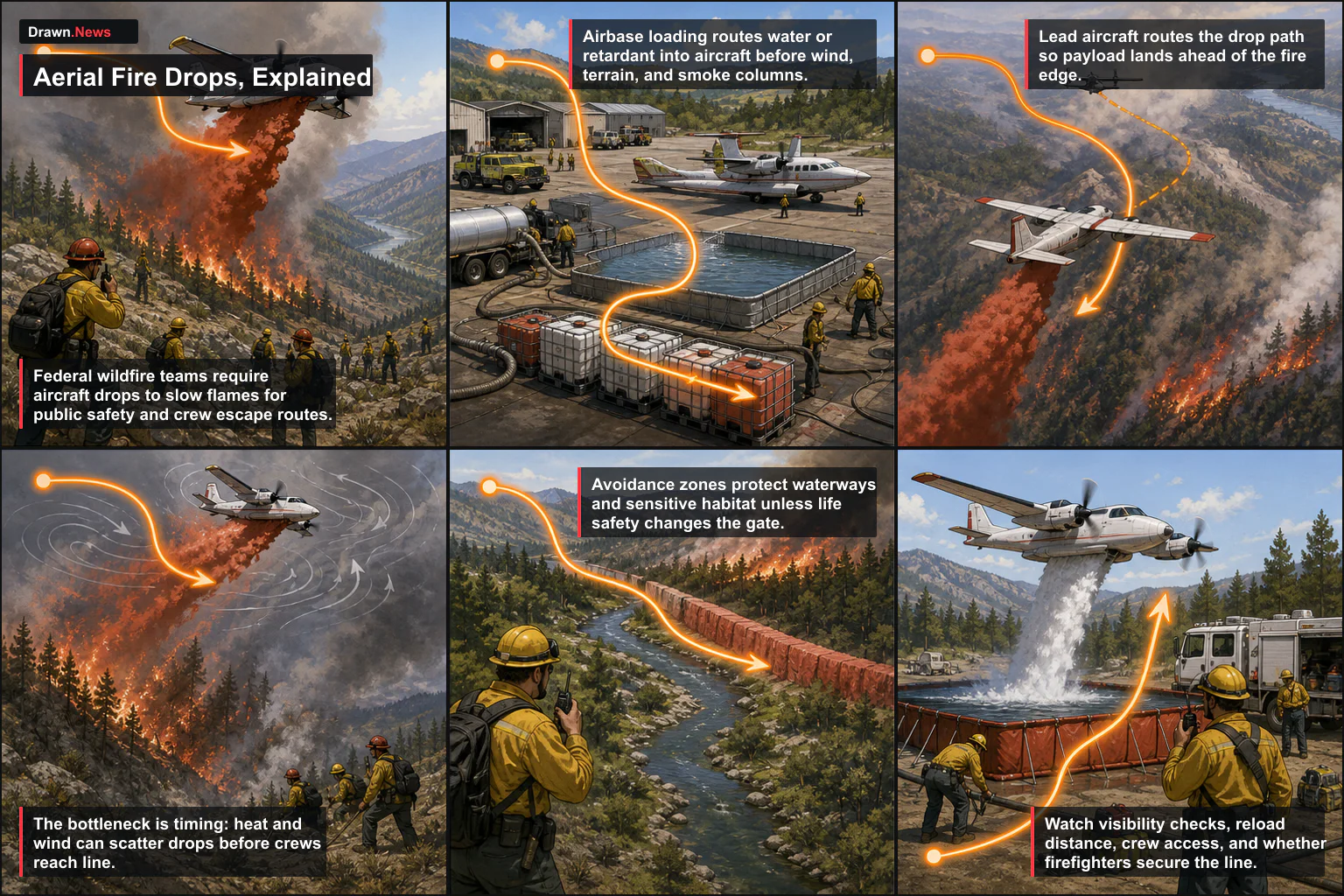
- Frame 1Federal wildfire teams require aircraft drops to slow flames for public safety and crew escape routes.
- Frame 2Airbase loading routes water or retardant into aircraft before wind, terrain, and smoke columns.
- Frame 3Lead aircraft routes the drop path so payload lands ahead of the fire edge.
- Frame 4The bottleneck is timing: heat and wind can scatter drops before crews reach line.
- Frame 5Avoidance zones protect waterways and sensitive habitat unless life safety changes the gate.
- Frame 6Watch visibility checks, reload distance, crew access, and whether firefighters secure the line.
How this was checked
- Reporting
- Cross-checked across 2 sources
- Claims
- We checked the names, dates, numbers, and core facts against the reporting linked above
- Artwork
- This is an editorial illustration based on the reporting, not source photography
- Published
- Aug 10, 12:27 PM EDT
- Our standards
- Editorial standards and corrections