Latest briefs Browse latest →
Broadcast Caps, Explained
Broadcast ownership caps turn station mergers into a household-reach calculation. FCC reviewers count station markets, ownership interests, and UHF-discount treatment, then decide whether the public-interest record supports approval, conditions, divestitures, waivers, delay, or rejection.
Full visual brief
Follow the story
Sources & verification
Sources behind this guide, checked before publication.
Brief text
Broadcast ownership caps turn station mergers into a household-reach calculation. FCC reviewers count station markets, ownership interests, and UHF-discount treatment, then decide whether the public-interest record supports approval, conditions, divestitures, waivers, delay, or rejection.
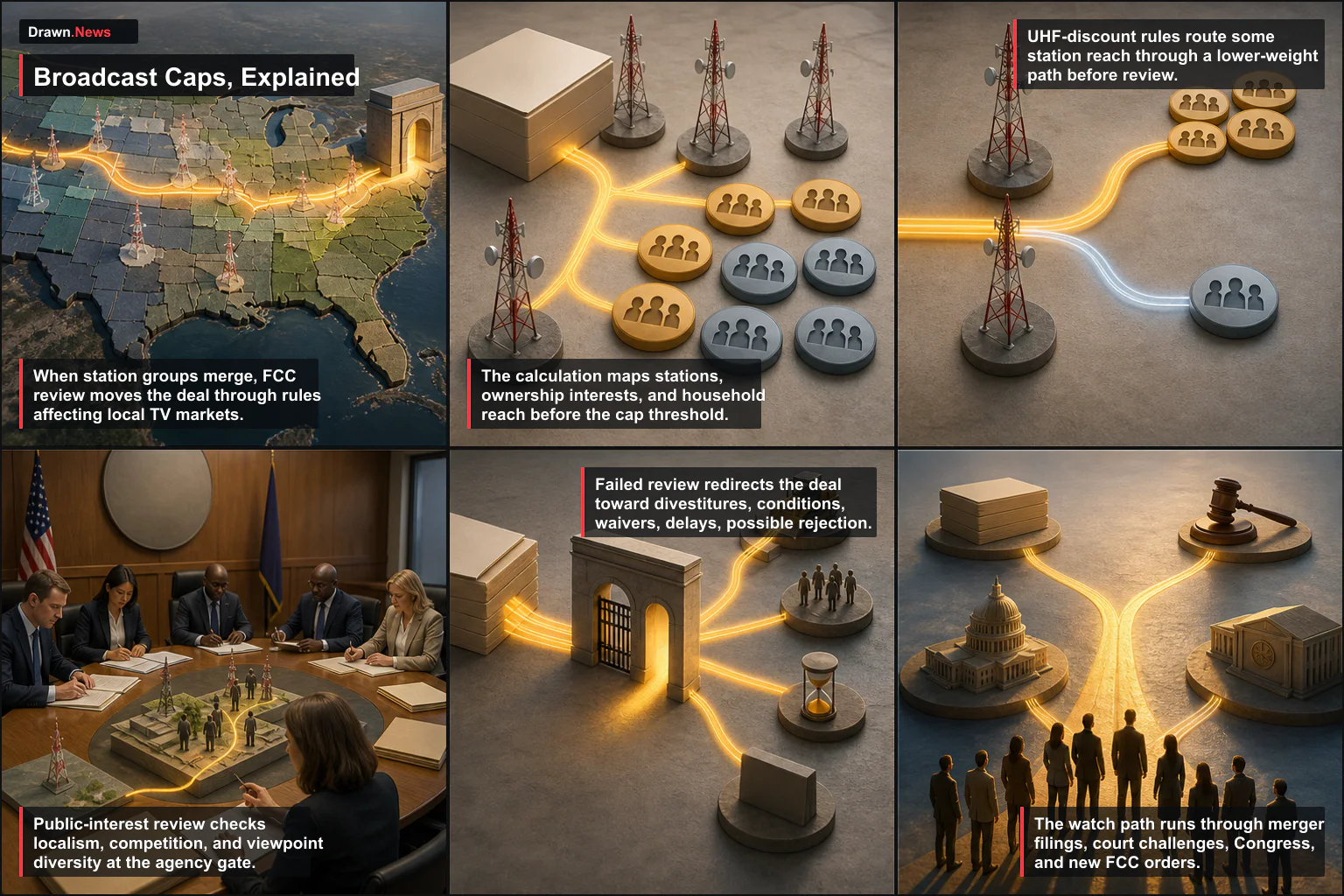
- Frame 1When station groups merge, FCC review moves the deal through rules affecting local TV markets.
- Frame 2The calculation maps stations, ownership interests, and household reach before the cap threshold.
- Frame 3UHF-discount rules route some station reach through a lower-weight path before review.
- Frame 4Public-interest review checks localism, competition, and viewpoint diversity at the agency gate.
- Frame 5Failed review redirects the deal toward divestitures, conditions, waivers, delays, possible rejection.
- Frame 6The watch path runs through merger filings, court challenges, Congress, and new FCC orders.
How this was checked
- Reporting
- Checked against 4 primary sources
- Claims
- We checked the names, dates, numbers, and core facts against the reporting linked above
- Artwork
- This is an editorial illustration based on the reporting, not source photography
- Published
- Aug 15, 12:18 PM EDT
- Our standards
- Editorial standards and corrections