Latest briefs Browse latest →
Court Requires Phone-Data Warrants
The Supreme Court rules broad geofence phone-data sweeps require warrants, limiting police access to phone-location records
Full visual brief
Follow the story
Sources & verification
Reporting behind this brief, checked before publication.
Brief text
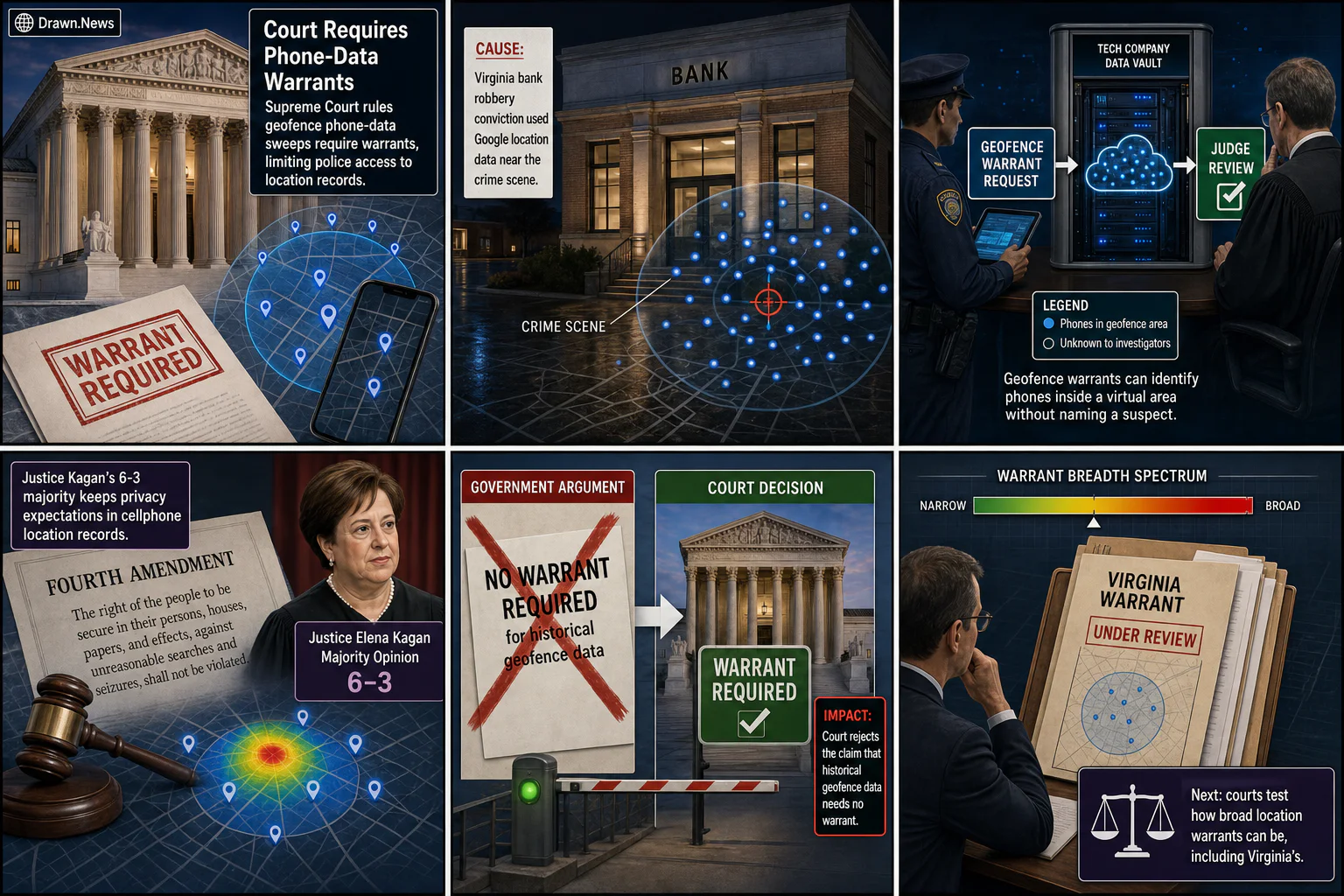
The Supreme Court ruled 6-3 that broad geofence cellphone-location data sweeps are Fourth Amendment searches, rejecting the government's claim that no warrant is required and sending courts into the next test over how narrow those warrants must be.
- Frame 1The Supreme Court rules broad geofence phone-data sweeps require warrants, limiting police access to phone-location records.
- Frame 2The case came from a Virginia bank robbery conviction built partly on Google location data near the crime scene.
- Frame 3Geofence warrants can identify phones inside a virtual area even when investigators have not named a suspect.
- Frame 4Justice Elena Kagan's 6-3 majority said people keep privacy expectations in cellphone location records.
- Frame 5The ruling rejected the government's argument that no warrant was required for historical geofence data.
- Frame 6Courts must now test how broad a location warrant can be, including the Virginia warrant itself.
How this was checked
- Reporting
- Cross-checked across 6 sources
- Claims
- We checked the names, dates, numbers, and core facts against the reporting linked above
- Artwork
- This is an editorial illustration based on the reporting, not source photography
- Published
- Jun 29, 7:15 PM EDT
- Our standards
- Editorial standards and corrections