Latest briefs Browse latest →
U.S. Fertility Measures Split
U.S. fertility data path says families are hard to count because annual births, lifetime expectations, and completed families diverge
Full visual brief
Follow the story
Sources & verification
Reporting behind this brief, checked before publication.
Brief text
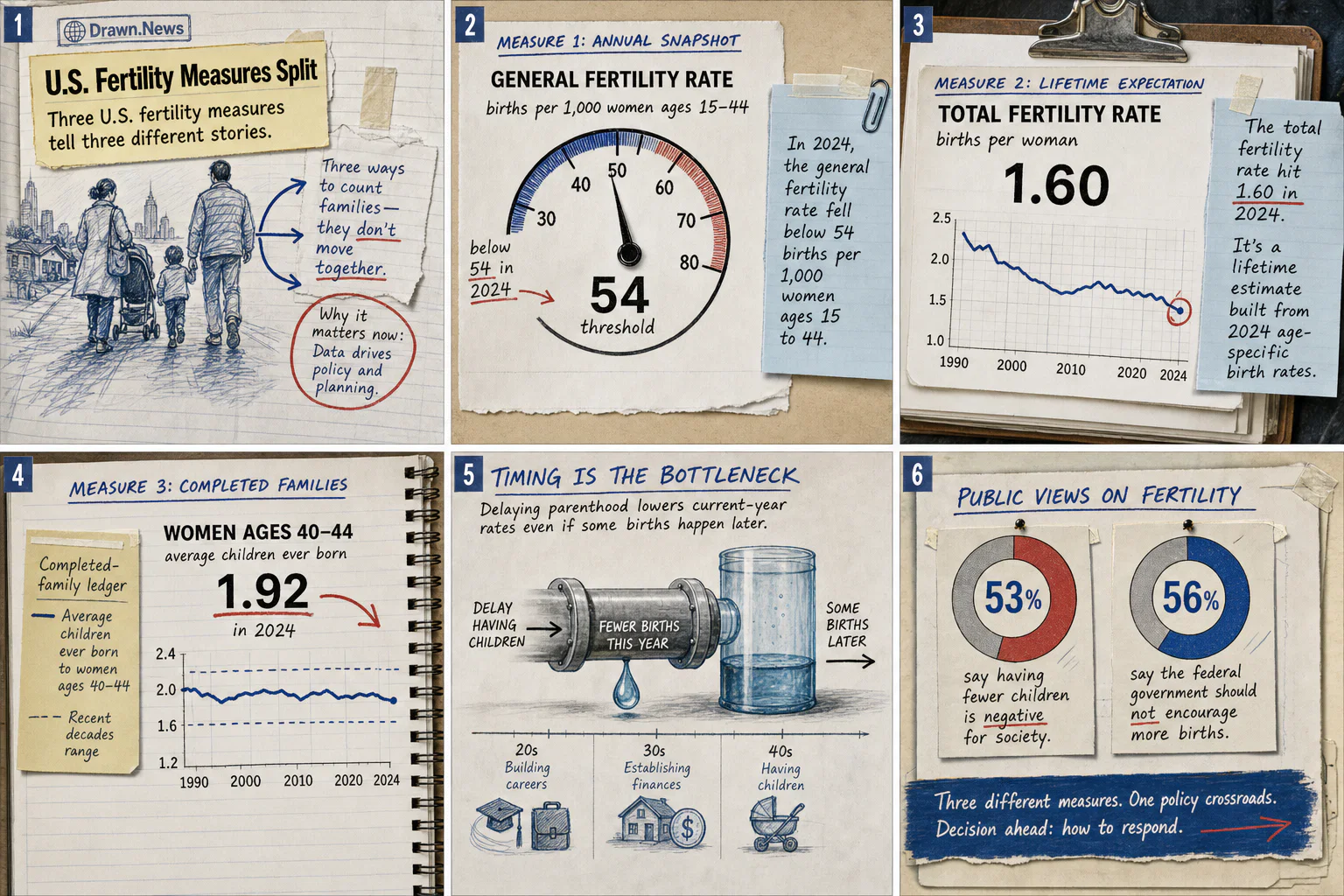
Three fertility measures split the family-size story: annual births are at record lows, expected lifetime births fell to 1.60, and completed families look steadier.
- Frame 1U.S. fertility data path says families are hard to count because annual births, lifetime expectations, and completed families diverge.
- Frame 2First meter: the general fertility rate fell below 54 births per 1,000 women ages 15 to 44 in 2024.
- Frame 3Second gate: the total fertility rate hit 1.60, a lifetime estimate built from 2024 age-specific birth rates.
- Frame 4Completed-family ledger: women ages 40 to 44 averaged 1.92 children in 2024, close to recent decades.
- Frame 5Timing is the bottleneck: delayed parenthood lowers current-year rates even if some births happen later.
- Frame 6Policy map: 53% call fewer children negative; 56% still say the federal government should not encourage more births.
How this was checked
- Reporting
- Checked against the primary source
- Claims
- We checked the names, dates, numbers, and core facts against the reporting linked above
- Artwork
- This is an editorial illustration based on the reporting, not source photography
- Published
- Jun 20, 10:10 AM EDT
- Our standards
- Editorial standards and corrections