Latest briefs Browse latest →
Wrongful Detention Designations
Wrongful-detention designations turn overseas detention cases into a U.S. review process linking legal criteria, consular limits, family support, diplomacy, sanctions tools and release negotiations.
Full visual brief
Follow the story
Sources & verification
Sources behind this guide, checked before publication.
Brief text
Wrongful-detention designations turn overseas detention cases into a U.S. review process linking legal criteria, consular limits, family support, diplomacy, sanctions tools and release negotiations.
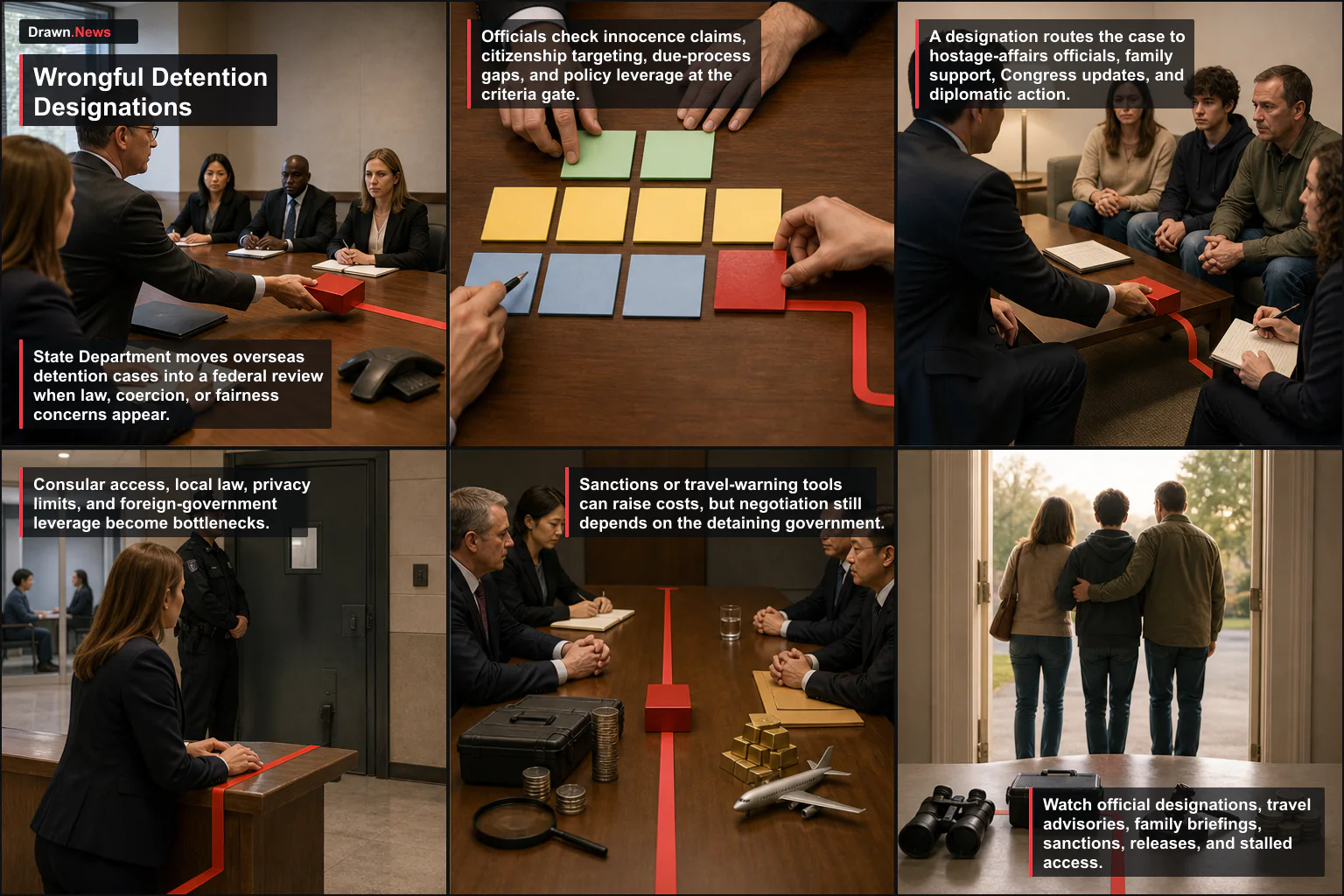
- Frame 1State Department moves overseas detention cases into a federal review when law, coercion, or fairness concerns appear.
- Frame 2Officials check innocence claims, citizenship targeting, due-process gaps, and policy leverage at the criteria gate.
- Frame 3A designation routes the case to hostage-affairs officials, family support, Congress updates, and diplomatic action.
- Frame 4Consular access, local law, privacy limits, and foreign-government leverage become bottlenecks.
- Frame 5Sanctions or travel-warning tools can raise costs, but negotiation still depends on the detaining government.
- Frame 6Watch official designations, travel advisories, family briefings, sanctions, releases, and stalled access.
How this was checked
- Reporting
- Cross-checked across 3 sources
- Claims
- We checked the names, dates, numbers, and core facts against the reporting linked above
- Artwork
- This is an editorial illustration based on the reporting, not source photography
- Published
- Aug 20, 4:51 PM EDT
- Our standards
- Editorial standards and corrections