Latest briefs Browse latest →
The Power Grid, Explained
The power grid moves electricity from generation through transmission and distribution while grid operators balance supply, demand, outages, and reliability risk.
Full visual brief
Follow the story
Sources & verification
Sources behind this guide, checked before publication.
Brief text
The power grid moves electricity from generation through transmission and distribution while grid operators balance supply, demand, outages, and reliability risk.
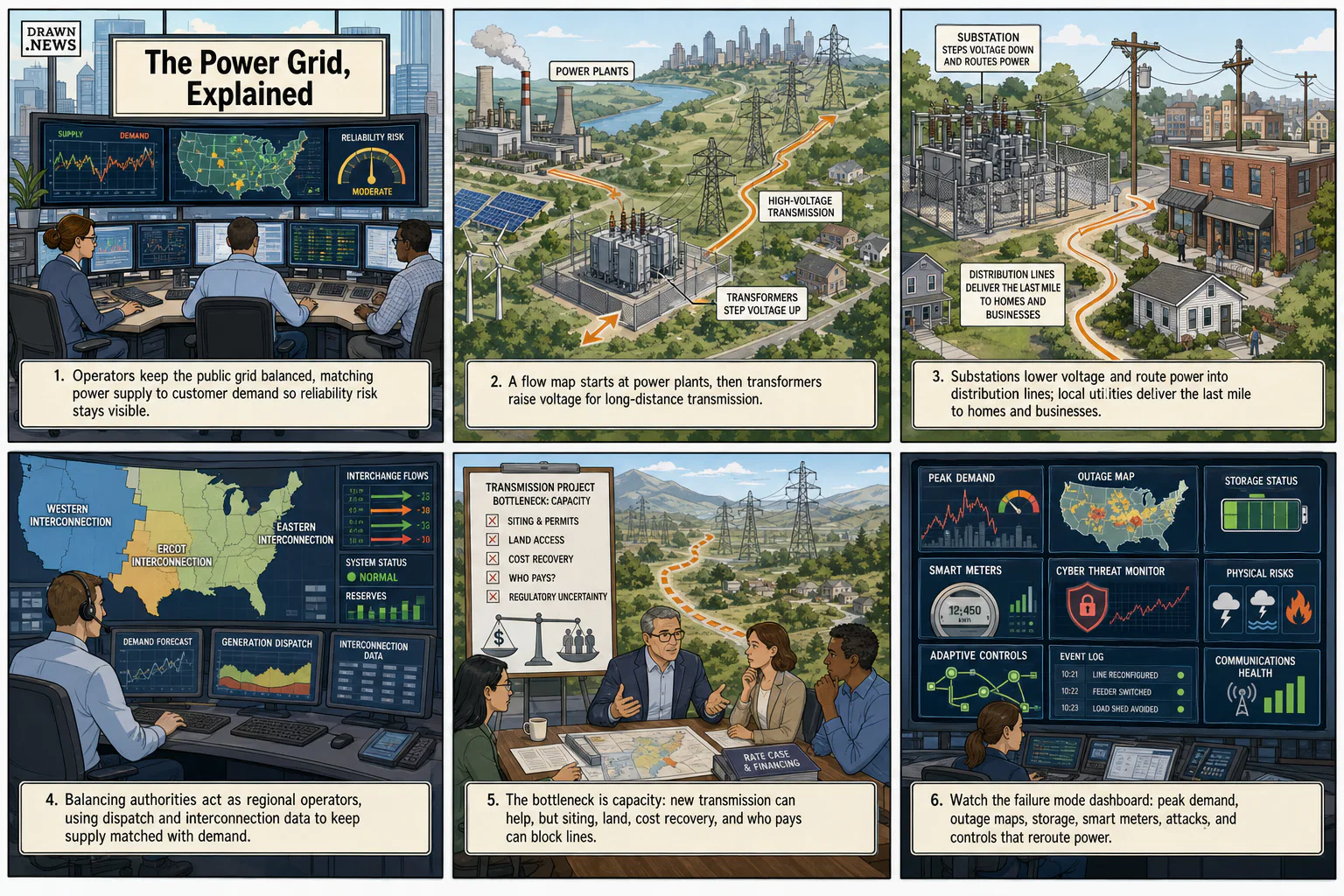
- Frame 1Operators keep the public grid balanced, matching power supply to customer demand so reliability risk stays visible.
- Frame 2A flow map starts at power plants, then transformers raise voltage for long-distance transmission.
- Frame 3Substations lower voltage and route power into distribution lines; local utilities deliver the last mile to homes and businesses.
- Frame 4Balancing authorities act as regional operators, using dispatch and interconnection data to keep supply matched with demand.
- Frame 5The bottleneck is capacity: new transmission can help, but siting, land, cost recovery, and who pays can block lines.
- Frame 6Watch the failure mode dashboard: peak demand, outage maps, storage, smart meters, attacks, and controls that reroute power.
How this was checked
- Reporting
- Cross-checked across 2 sources
- Claims
- We checked the names, dates, numbers, and core facts against the reporting linked above
- Artwork
- This is an editorial illustration based on the reporting, not source photography
- Published
- Jun 4, 4:09 PM EDT
- Our standards
- Editorial standards and corrections