Latest briefs Browse latest →
The Filibuster, Explained
The Senate filibuster can delay or block action unless enough senators vote for cloture, making the 60-vote threshold a recurring fight over power.
Full visual brief
Follow the story
Sources & verification
Sources behind this guide, checked before publication.
Brief text
The Senate filibuster can delay or block action unless enough senators vote for cloture, making the 60-vote threshold a recurring fight over power.
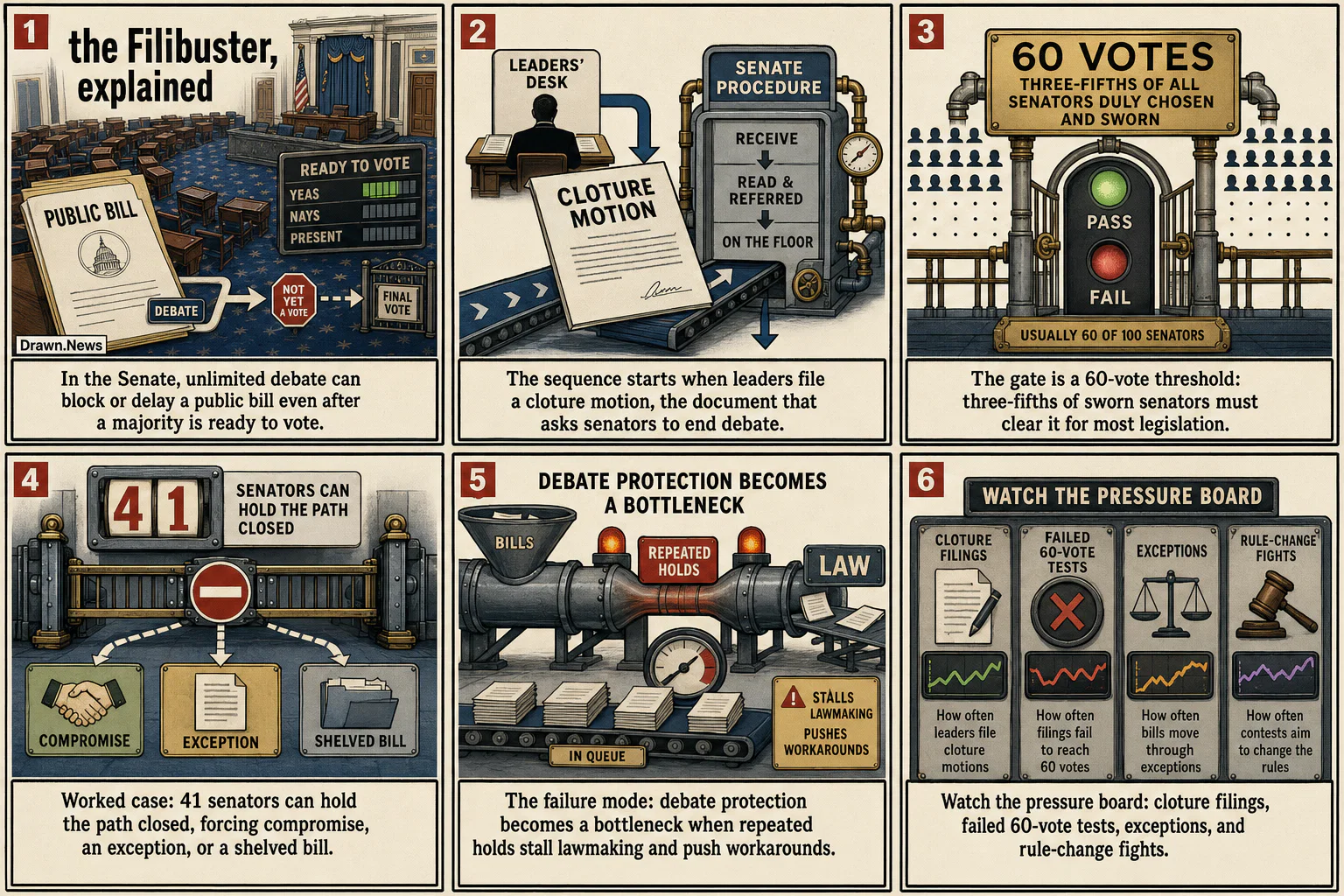
- Frame 1In the Senate, unlimited debate can block or delay a public bill even after a majority is ready to vote.
- Frame 2The sequence starts when leaders file a cloture motion, the document that asks senators to end debate.
- Frame 3The gate is a 60-vote threshold: three-fifths of sworn senators must clear it for most legislation.
- Frame 4Worked case: 41 senators can hold the path closed, forcing compromise, an exception, or a shelved bill.
- Frame 5The failure mode: debate protection becomes a bottleneck when repeated holds stall lawmaking and push workarounds.
- Frame 6Watch the pressure board: cloture filings, failed 60-vote tests, exceptions, and rule-change fights.
How this was checked
- Reporting
- Cross-checked across 2 sources
- Claims
- We checked the names, dates, numbers, and core facts against the reporting linked above
- Artwork
- This is an editorial illustration based on the reporting, not source photography
- Published
- Jun 4, 9:38 AM EDT
- Our standards
- Editorial standards and corrections