Latest briefs Browse latest →
How Collapse Rescue Works
Structural-collapse rescue turns unstable rubble, command posts, specialized teams, search technology, shoring, medical handoffs and aftershock risk into decisions about where rescuers can safely search next.
Full visual brief
Follow the story
Sources & verification
Sources behind this guide, checked before publication.
Brief text
Structural-collapse rescue turns unstable rubble, command posts, specialized teams, search technology, shoring, medical handoffs and aftershock risk into decisions about where rescuers can safely search next.
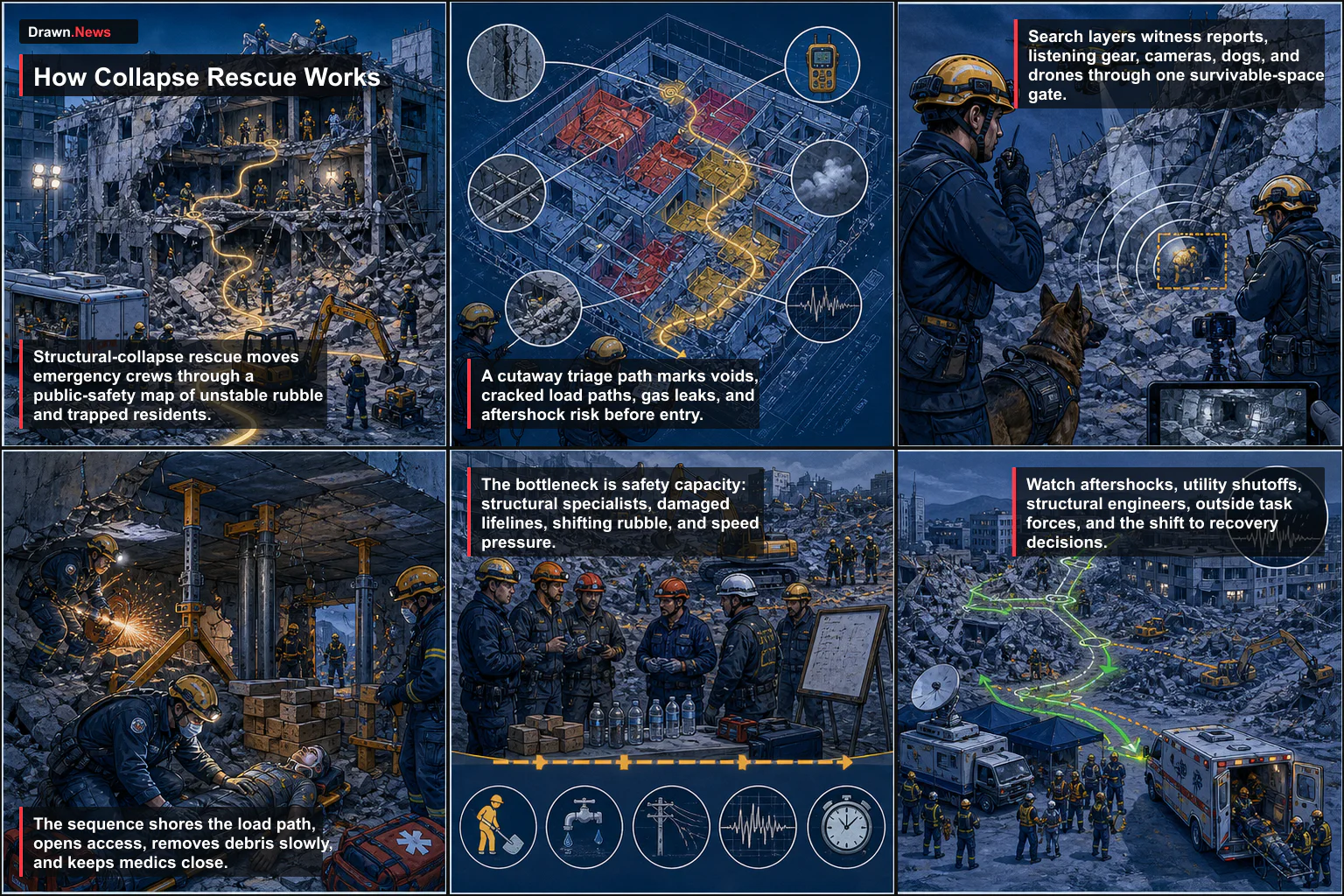
- Frame 1Structural-collapse rescue moves emergency crews through a public-safety map of unstable rubble and trapped residents.
- Frame 2A cutaway triage path marks voids, cracked load paths, gas leaks, and aftershock risk before entry.
- Frame 3Search layers witness reports, listening gear, cameras, dogs, and drones through one survivable-space gate.
- Frame 4The sequence shores the load path, opens access, removes debris slowly, and keeps medics close.
- Frame 5The bottleneck is safety capacity: structural specialists, damaged lifelines, shifting rubble, and speed pressure.
- Frame 6Watch aftershocks, utility shutoffs, structural engineers, outside task forces, and the shift to recovery decisions.
How this was checked
- Reporting
- Cross-checked across 4 sources
- Claims
- We checked the names, dates, numbers, and core facts against the reporting linked above
- Artwork
- This is an editorial illustration based on the reporting, not source photography
- Published
- Jul 29, 12:24 PM EDT
- Our standards
- Editorial standards and corrections