Latest briefs Browse latest →
Storm Warnings, Explained
Storm warnings turn forecasts, radar, flood risk, evacuation zones and local emergency decisions into public alerts before conditions arrive.
Full visual brief
Follow the story
Sources & verification
Sources behind this guide, checked before publication.
Brief text
Storm warnings turn forecasts, radar, flood risk, evacuation zones and local emergency decisions into public alerts before conditions arrive.
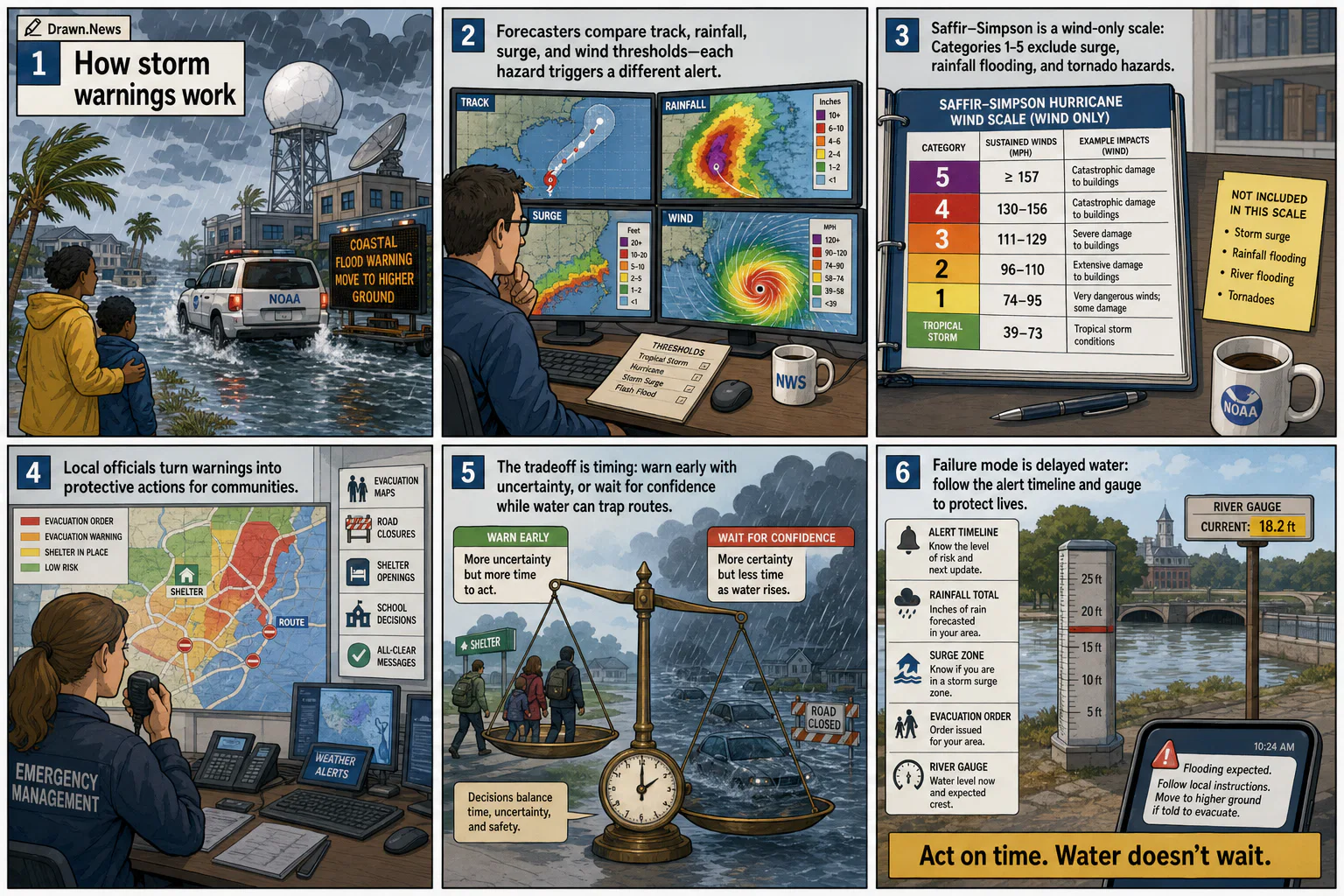
- Frame 1The storm-warning data path turns radar, track, rain, surge, and wind into public alerts for residents at risk.
- Frame 2Forecasters compare track, rainfall, surge, and wind thresholds on maps, because each hazard triggers a different alert.
- Frame 3Saffir-Simpson is a wind-only threshold: categories 1 to 5 exclude surge, rainfall flooding, and tornado hazards.
- Frame 4The local decision chain converts warnings into evacuation maps, road closures, shelter openings, school decisions, and all-clear messages.
- Frame 5The tradeoff is timing: warn early with uncertainty, or wait for confidence while water can trap routes.
- Frame 6The failure mode is delayed water: follow the alert timeline, rainfall total, surge zone, evacuation order, and river gauge.
How this was checked
- Reporting
- Cross-checked across 2 sources
- Claims
- We checked the names, dates, numbers, and core facts against the reporting linked above
- Artwork
- This is an editorial illustration based on the reporting, not source photography
- Published
- Jun 19, 12:25 PM EDT
- Our standards
- Editorial standards and corrections