Latest briefs Browse latest →
Oil Prices, Explained
Oil prices move when supply, demand, inventories, shipping routes, refinery needs and geopolitical risk change what buyers will pay for the next barrel.
Full visual brief
Follow the story
Sources & verification
Sources behind this guide, checked before publication.
Brief text
Oil prices move when supply, demand, inventories, shipping routes, refinery needs and geopolitical risk change what buyers will pay for the next barrel.
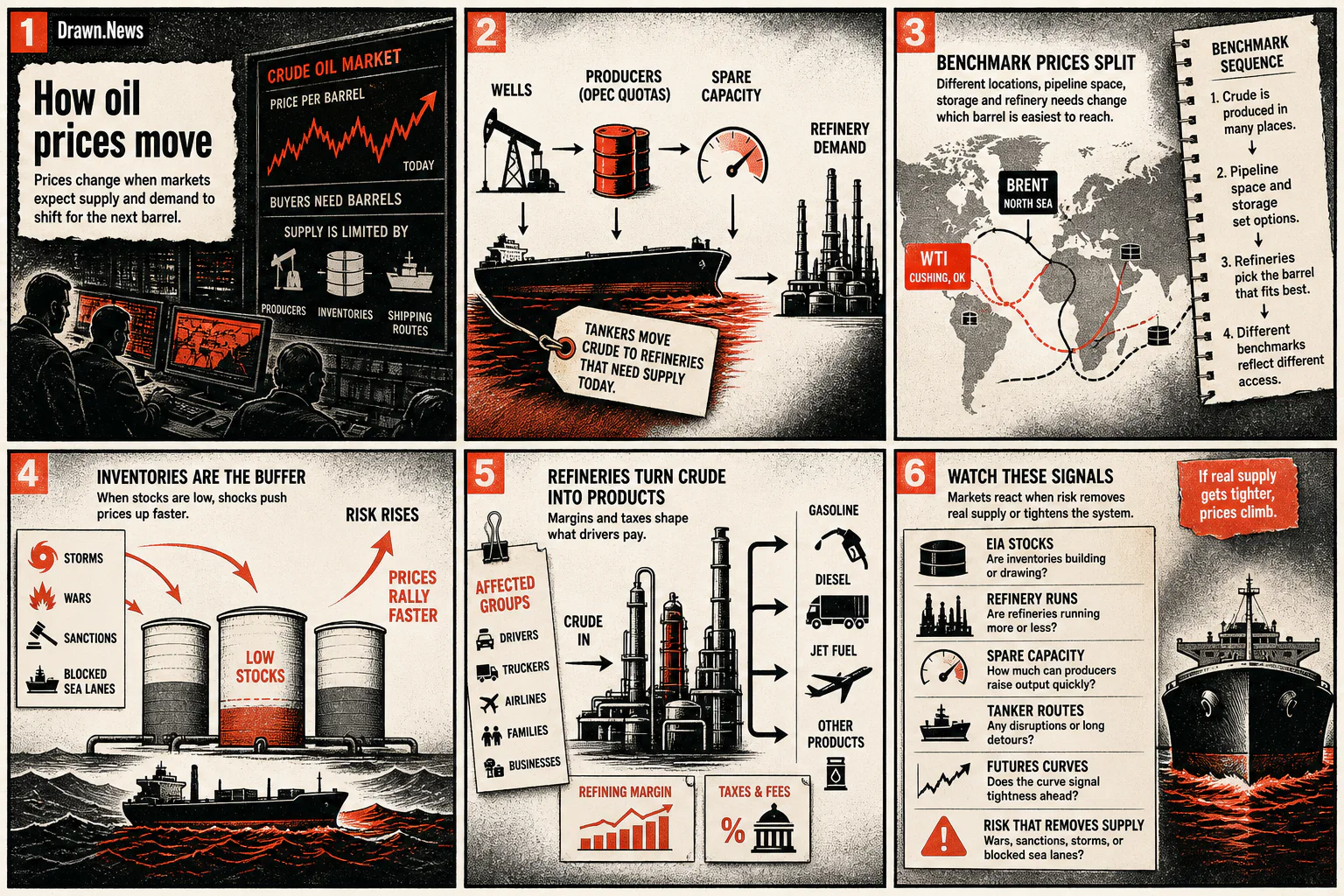
- Frame 1Oil prices move on a market price board while buyers need barrels and producers, inventories and shipping routes limit supply.
- Frame 2Supply chain: wells, OPEC quotas, spare capacity and tankers meet refinery demand for crude needed today.
- Frame 3Benchmark map: Brent and WTI split when geography, pipeline space, storage and refinery needs change which barrel is reachable.
- Frame 4Inventory meter: low tanks make wars, sanctions, storms or blocked sea lanes raise prices faster.
- Frame 5Refinery flow: crude turns into gasoline, diesel and jet fuel, then margins and taxes shape pump prices.
- Frame 6Watch signal: EIA stocks, refinery runs, spare capacity, tanker routes, futures curves and whether risk removes real supply.
How this was checked
- Reporting
- Cross-checked across 2 sources
- Claims
- We checked the names, dates, numbers, and core facts against the reporting linked above
- Artwork
- This is an editorial illustration based on the reporting, not source photography
- Published
- Jun 19, 8:28 PM EDT
- Our standards
- Editorial standards and corrections