Latest briefs Browse latest →
Missile Defense, Explained
Missile defense turns radar tracks, command decisions and interceptor shots into a layered race against incoming rockets, drones and missiles.
Full visual brief
Follow the story
Sources & verification
Sources behind this guide, checked before publication.
Brief text
Missile defense turns radar tracks, command decisions and interceptor shots into a layered race against incoming rockets, drones and missiles.
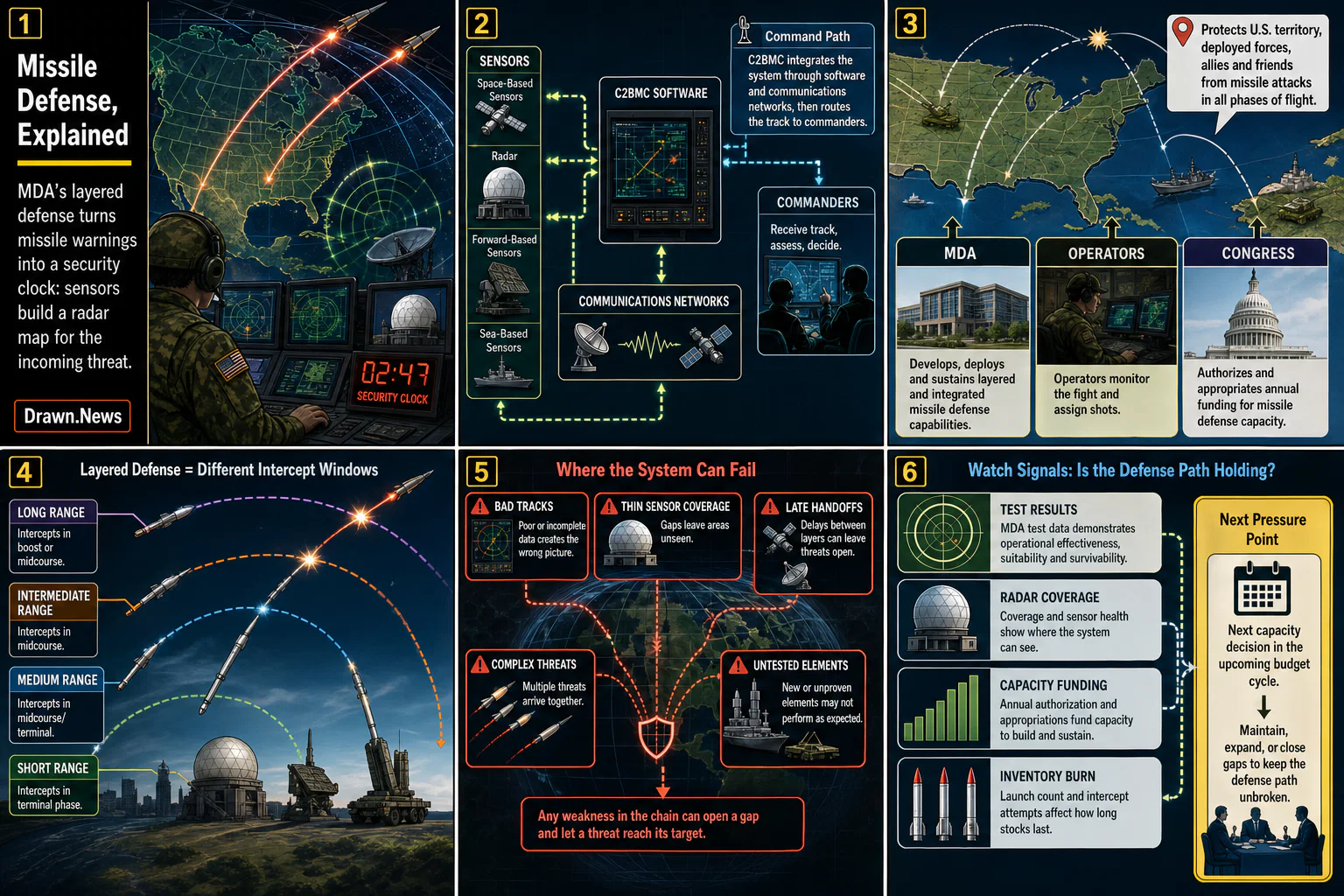
- Frame 1MDA's layered defense turns missile warnings into a security clock: sensors build a radar map for the incoming threat.
- Frame 2A data path moves through sensors, C2BMC software and communications networks, then routes the track to commanders.
- Frame 3Who acts and pays: MDA sustains the agency architecture, operators assign shots, and Congress funds annual capacity.
- Frame 4A layered diagram shows the tradeoff: short, medium, intermediate and long-range threats need different intercept windows.
- Frame 5Failure mode: bad tracks, thin sensor coverage, late handoffs, complex threats or untested elements leave gaps in the grid.
- Frame 6Watch signal: test results, radar coverage, capacity funding and inventory burn show whether the defense path holds.
How this was checked
- Reporting
- Cross-checked across 2 sources
- Claims
- We checked the names, dates, numbers, and core facts against the reporting linked above
- Artwork
- This is an editorial illustration based on the reporting, not source photography
- Published
- Jun 9, 4:24 PM EDT
- Our standards
- Editorial standards and corrections