Latest briefs Browse latest →
A discharge petition lets House members try to force a floor vote
A discharge petition lets House members try to force a floor vote when leadership will not move a bill.
Full visual brief
Follow the story
Sources & verification
Sources behind this guide, checked before publication.
Brief text
A discharge petition lets House members try to force a floor vote when leadership will not move a bill.
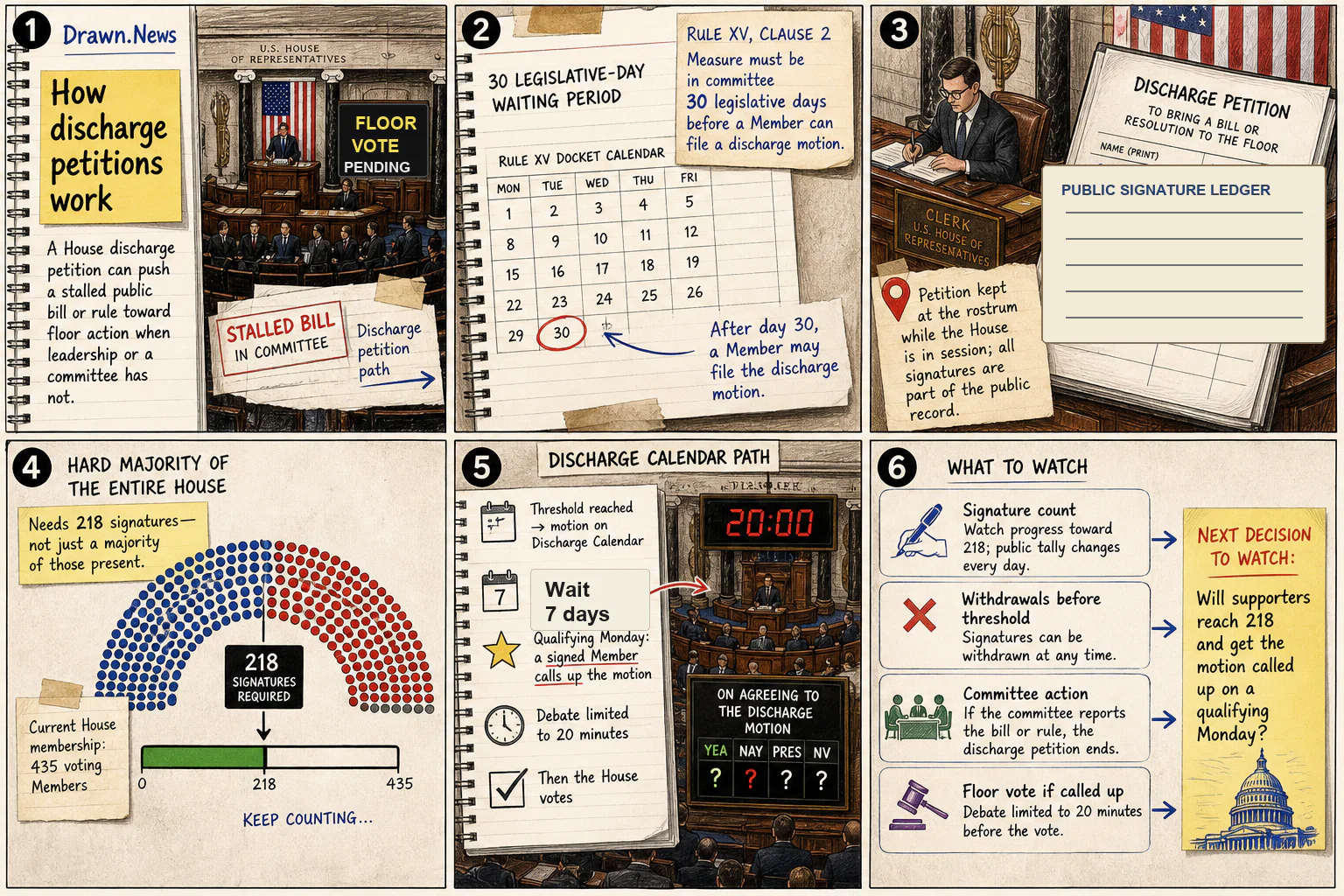
- Frame 1How discharge petitions work: House members can force a stalled bill toward a floor vote.
- Frame 2Committee gate: Rule XV usually waits 30 legislative days before a Member files the motion.
- Frame 3Public document: the Clerk keeps the petition at the rostrum while the House is in session.
- Frame 4Threshold map: 218 voting members, a hard House majority, must sign before the motion moves.
- Frame 5Calendar bottleneck: after seven days on the Discharge Calendar, a signer can trigger debate and a vote.
- Frame 6Failure mode: withdrawals, committee reporting, amendments, or Senate inaction can stop the chain after signatures.
How this was checked
- Reporting
- Cross-checked across 2 sources
- Claims
- We checked the names, dates, numbers, and core facts against the reporting linked above
- Artwork
- This is an editorial illustration based on the reporting, not source photography
- Published
- Jun 24, 4:20 PM EDT
- Our standards
- Editorial standards and corrections