Latest briefs Browse latest →
How Court Injunctions Work
Court injunctions let judges pause or require specific action before final judgment while a lawsuit tests notice, harm, legal authority, equities, public interest and scope.
Full visual brief
Follow the story
Sources & verification
Sources behind this guide, checked before publication.
Brief text
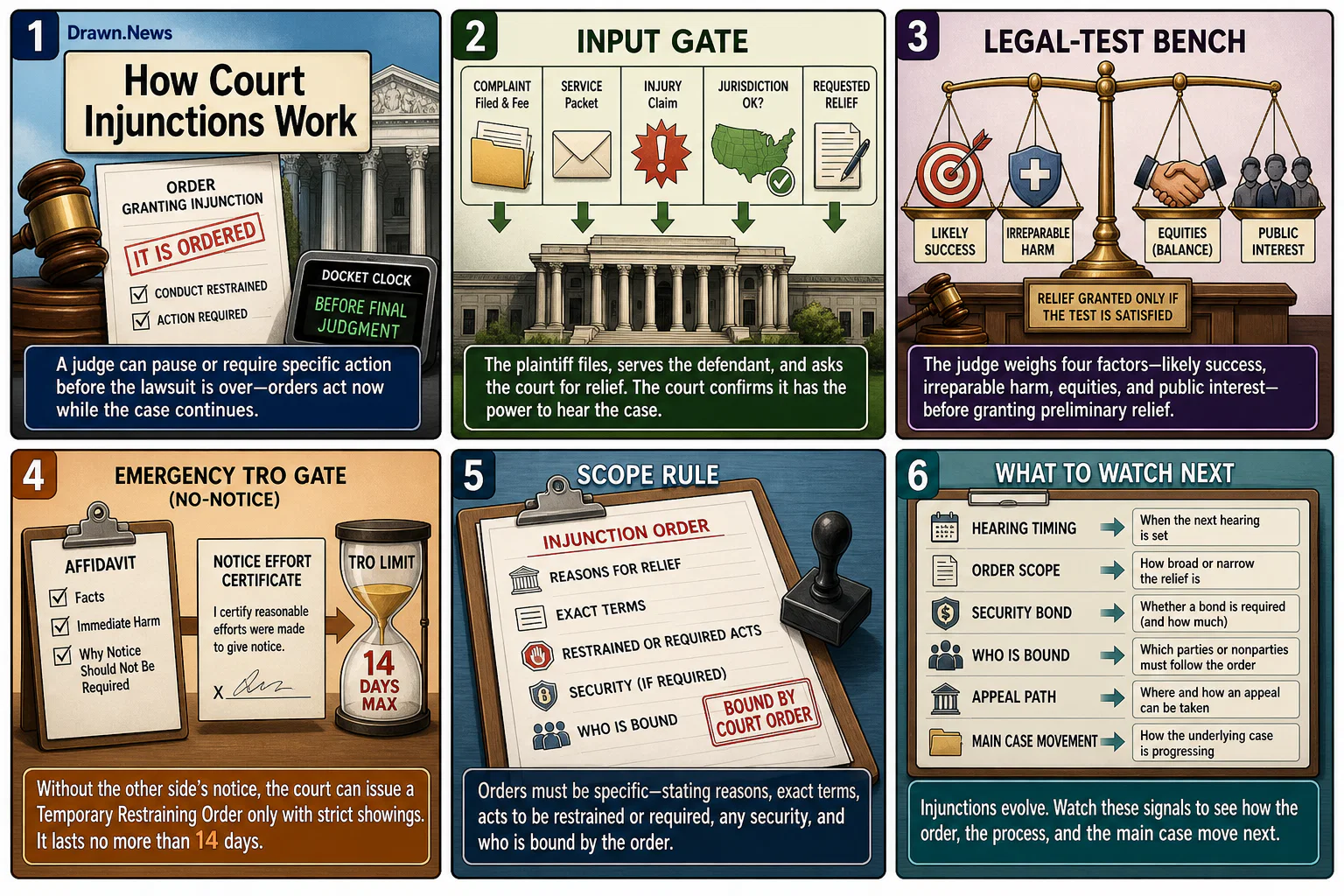
Court injunctions let judges pause or require specific action before final judgment while a lawsuit tests notice, harm, legal authority, equities, public interest and scope.
- Frame 1Court injunctions are orders a judge can issue to pause or require conduct before final judgment.
- Frame 2Input gate: the complaint and service packet move claimed injury, jurisdiction, and requested relief into court.
- Frame 3Legal test: preliminary relief turns on likely success, irreparable harm, equities, and public interest.
- Frame 4Emergency gate: a TRO needs specific facts, notice efforts, and a short clock before the other side responds.
- Frame 5Scope rule: the order must state reasons, precise terms, and restrained or required acts, often with security.
- Frame 6Failure signal: watch hearing timing, bond amount, who is bound, appeal path, and whether the main case advances.
How this was checked
- Reporting
- Cross-checked across 4 sources
- Claims
- We checked the names, dates, numbers, and core facts against the reporting linked above
- Artwork
- This is an editorial illustration based on the reporting, not source photography
- Published
- Jun 8, 4:17 PM EDT
- Our standards
- Editorial standards and corrections