Latest briefs Browse latest →
Central Bank Rates Change Borrowing Costs
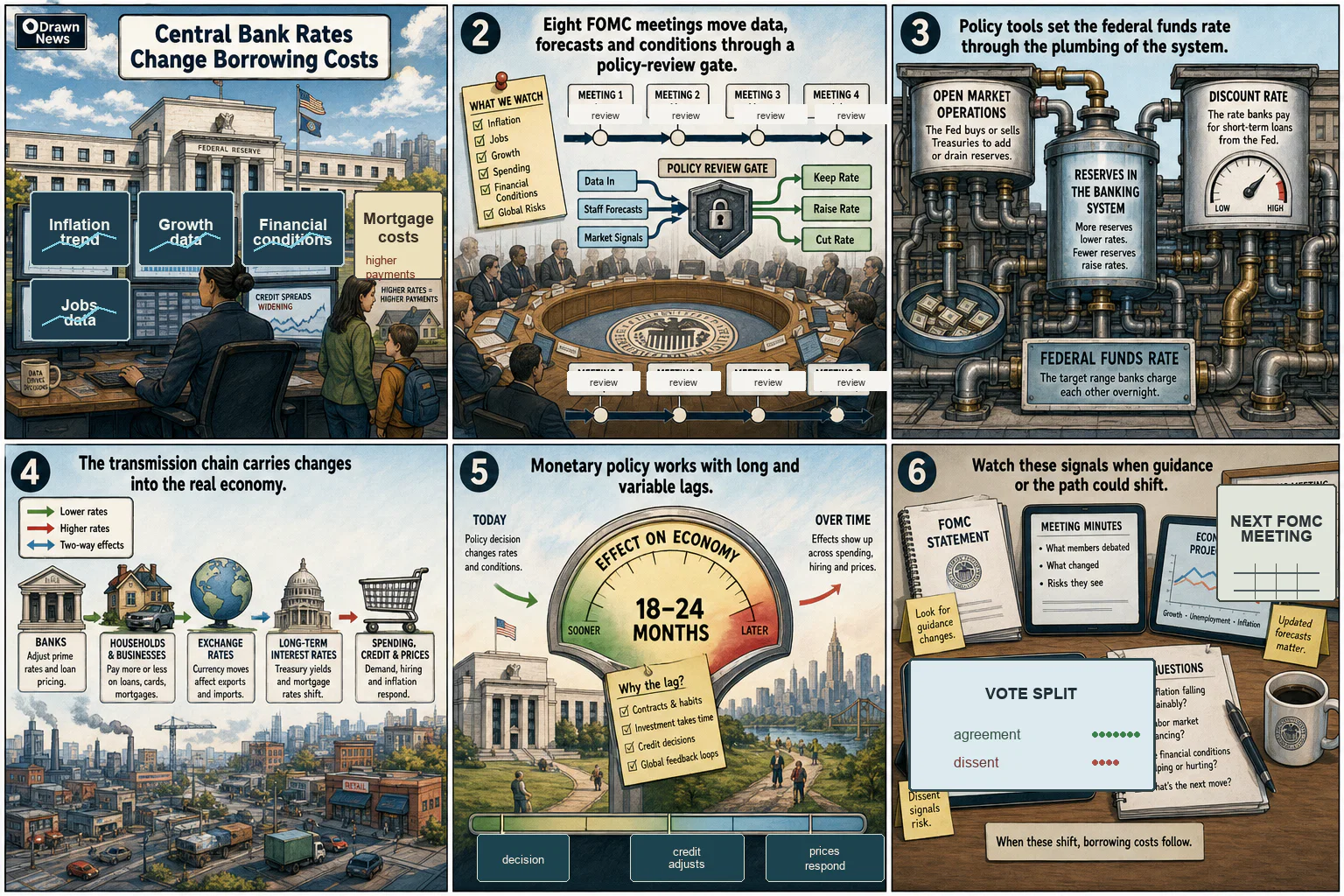
Central bank rate decisions turn inflation, jobs, growth, financial conditions and risk forecasts into policy choices that change borrowing costs.
Full visual brief
Follow the story
Sources & verification
Sources behind this guide, checked before publication.
Brief text
Central bank rate decisions turn inflation, jobs, growth, financial conditions and risk forecasts into policy choices that change borrowing costs.
- Frame 1Fed rate decisions turn inputs from inflation, jobs, growth and credit data into borrowing costs households feel.
- Frame 2An eight-meeting FOMC timeline moves data, forecasts and financial conditions through a policy-review gate.
- Frame 3A policy diagram connects open-market operations, discount rates and reserve requirements to the federal funds rate.
- Frame 4The transmission chain reaches short-term loans, exchange rates, long-term rates, credit and prices across the economy.
- Frame 5A lag meter shows monetary policy can take 18 to 24 months to fully affect the economy.
- Frame 6Watch the statement, minutes, forecasts, vote split and next meeting date when guidance shifts.
How this was checked
- Reporting
- Cross-checked across 2 sources
- Claims
- We checked the names, dates, numbers, and core facts against the reporting linked above
- Artwork
- This is an editorial illustration based on the reporting, not source photography
- Published
- Jun 20, 8:22 AM EDT
- Our standards
- Editorial standards and corrections