Latest briefs Browse latest →
Agency Enforcement, Explained
Agency enforcement turns statutes, rules, investigations, evidence, settlements and court fights into public consequences for companies or institutions.
Full visual brief
Follow the story
Sources & verification
Sources behind this guide, checked before publication.
Brief text
Agency enforcement turns statutes, rules, investigations, evidence, settlements and court fights into public consequences for companies or institutions.
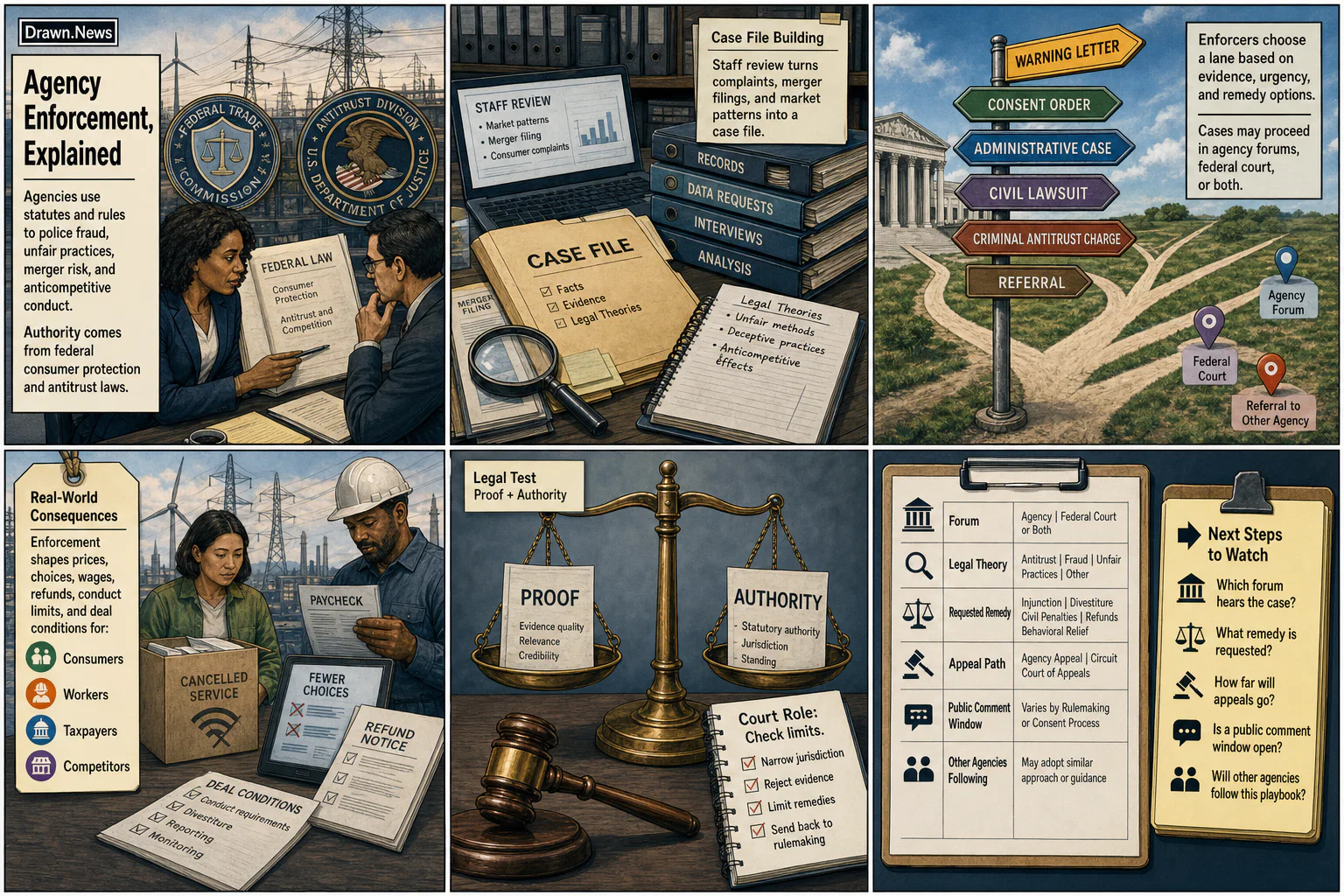
- Frame 1An agency enforcement case starts with a statute or rule authorizing officials to police conduct, merger risk, fraud, or unfair practices.
- Frame 2A complaint, merger filing, market pattern, or staff review becomes a case file: records, data requests, interviews, and legal theories accumulate.
- Frame 3Enforcers choose a lane: warning letter, consent order, administrative case, referral, civil lawsuit, or criminal antitrust charge.
- Frame 4Affected parties feel consequences through price effects, lost choices, wage pressure, refunds, conduct limits, or deal conditions.
- Frame 5The constraint is proof plus authority: courts can narrow jurisdiction, reject evidence, limit remedies, or send the agency back to rulemaking.
- Frame 6Watch the forum, legal theory, requested remedy, appeal path, public comment window, and whether another agency copies the playbook.
How this was checked
- Reporting
- Cross-checked across 2 sources
- Claims
- We checked the names, dates, numbers, and core facts against the reporting linked above
- Artwork
- This is an editorial illustration based on the reporting, not source photography
- Published
- Jun 20, 12:24 PM EDT
- Our standards
- Editorial standards and corrections