Latest briefs Browse latest →
House Votes for Permanent Daylight Saving
The House voted 308 to 117 to halt clock changes, leaving the Senate to weigh darker winter school commutes against longer evenings
Full visual brief
Follow the story
Sources & verification
Reporting behind this brief, checked before publication.
Brief text
House Republicans and Democrats united in favor of a bill to eliminate semiannual clock-changing, but it faces an uncertain fate in the Senate.
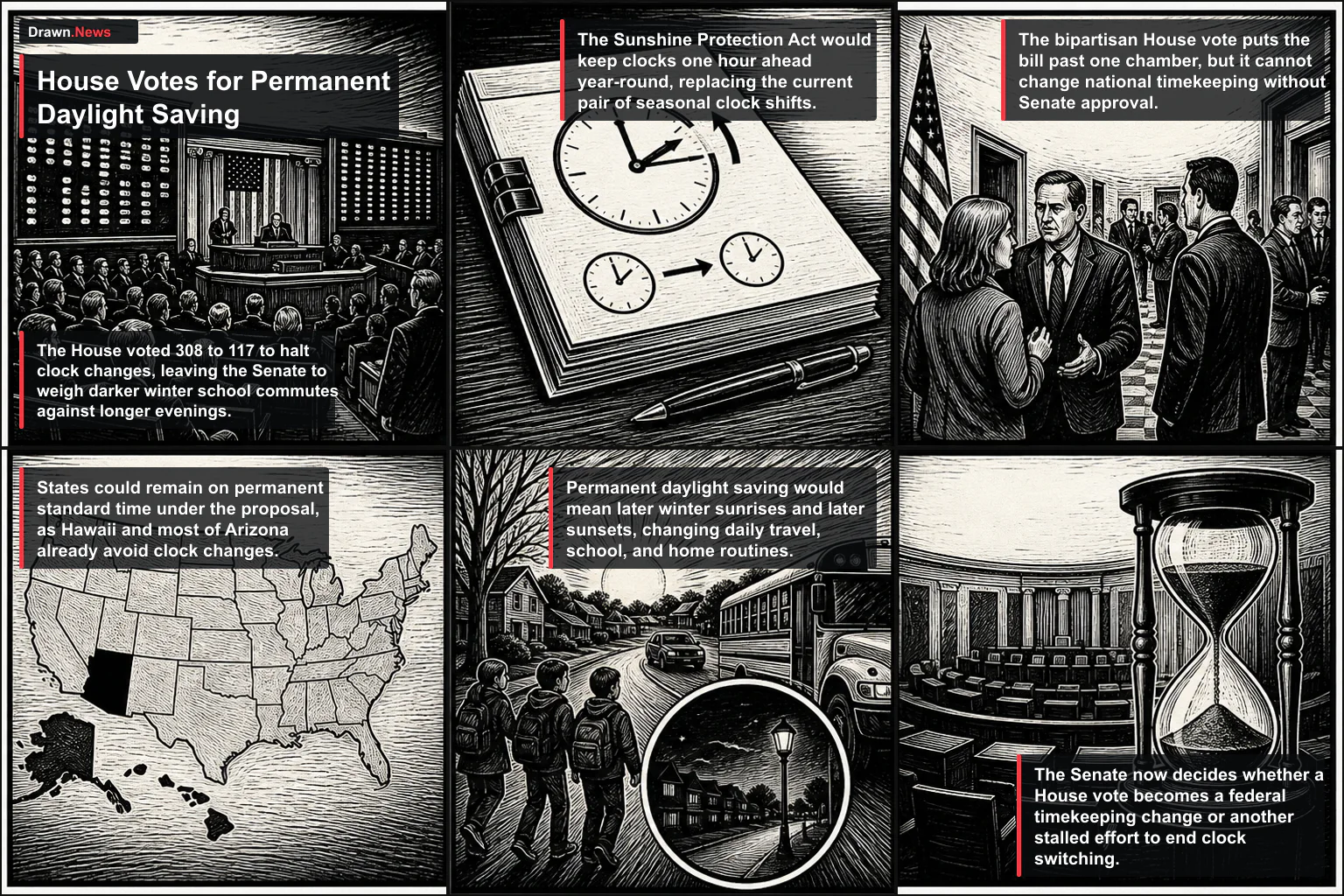
- Frame 1The House voted 308 to 117 to halt clock changes, leaving the Senate to weigh darker winter school commutes against longer evenings.
- Frame 2The Sunshine Protection Act would keep clocks one hour ahead year-round, replacing the current pair of seasonal clock shifts.
- Frame 3The bipartisan House vote puts the bill past one chamber, but it cannot change national timekeeping without Senate approval.
- Frame 4States could remain on permanent standard time under the proposal, as Hawaii and most of Arizona already avoid clock changes.
- Frame 5Permanent daylight saving would mean later winter sunrises and later sunsets, changing daily travel, school, and home routines.
- Frame 6The Senate now decides whether a House vote becomes a federal timekeeping change or another stalled effort to end clock switching.
How this was checked
- Reporting
- Cross-checked across 7 sources
- Claims
- We checked the names, dates, numbers, and core facts against the reporting linked above
- Artwork
- This is an editorial illustration based on the reporting, not source photography
- Published
- Jul 14, 11:10 PM EDT
- Our standards
- Editorial standards and corrections